80a203bd23
- None disables logging altogether. This is useful when we want to prevent
FreedomBox from collecting IP addresses of visitors and other sensitive
information.

- Volatile logs are kept in RAM until the system is rebooted. Only 5% of RAM
will be used at most and only 2 days worth of logs are kept.

- Permanent will store logs into /var/log/journal. systemd-journald defaults
will apply. 10% of disk capacity is used at most, capped at 4GiB. Also logging
will stop if free space is below 15%. Maximum of 100 files are kept. No time
based cleanup is done.

Tests:

- Set the logging mode to disabled. Observe that `journalctl -f` does not show
any logs (say when performing plinth actions).

- Set the logging mode to volatile. Observe that `journalctl` shows that logging
is set to /run/log/journal/ and 5% of available memory is set as maximum.

- Set the logging mode to persistent. Observe that `journalctl` shows that
logging is set to /var/log/journal/ and 10% of disk space is set as maximum.

Signed-off-by: Sunil Mohan Adapa <sunil@medhas.org>
Reviewed-by: James Valleroy <jvalleroy@mailbox.org>





FreedomBox Service (Plinth)
The core functionality and web front-end of FreedomBox.



Description
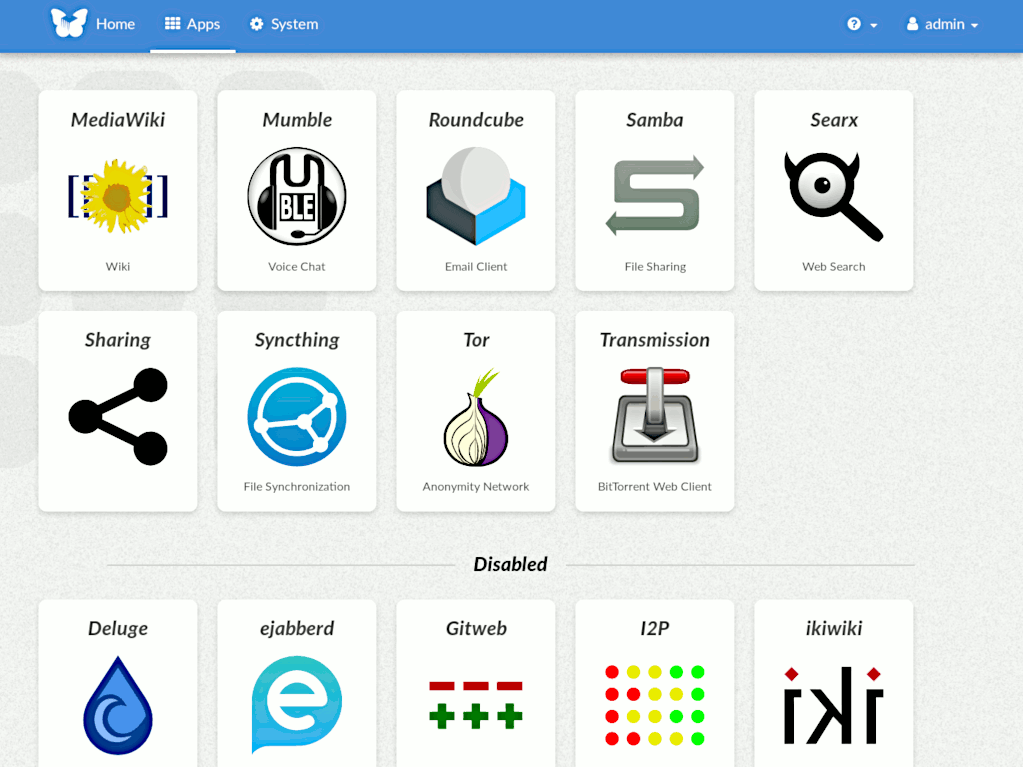
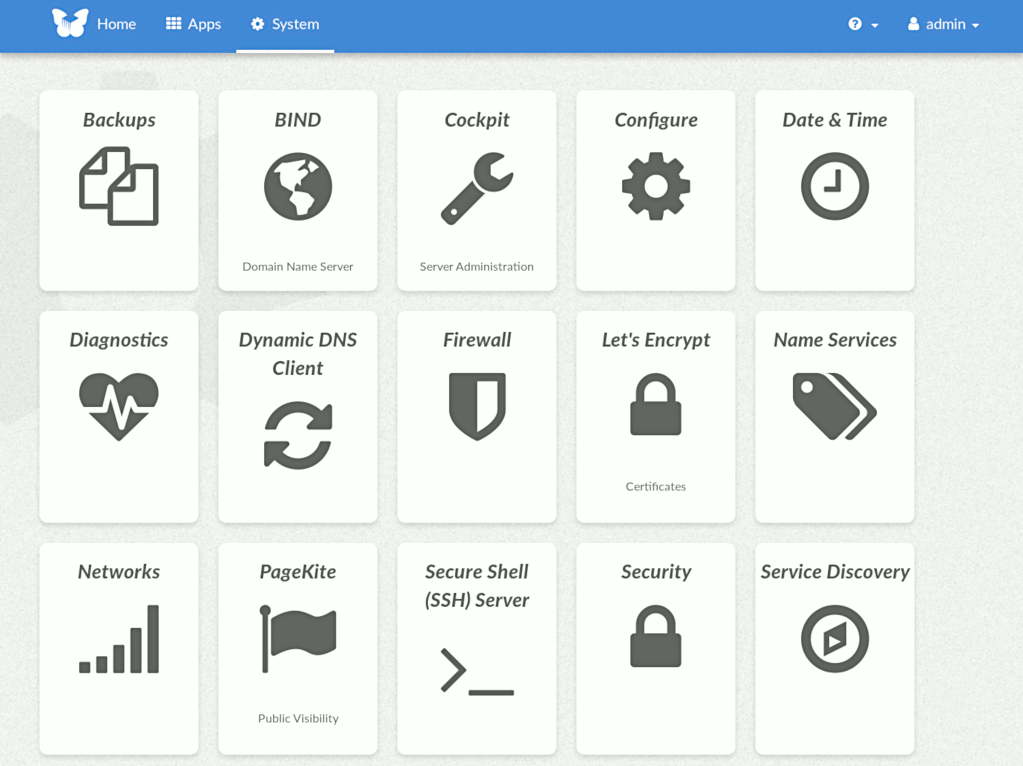
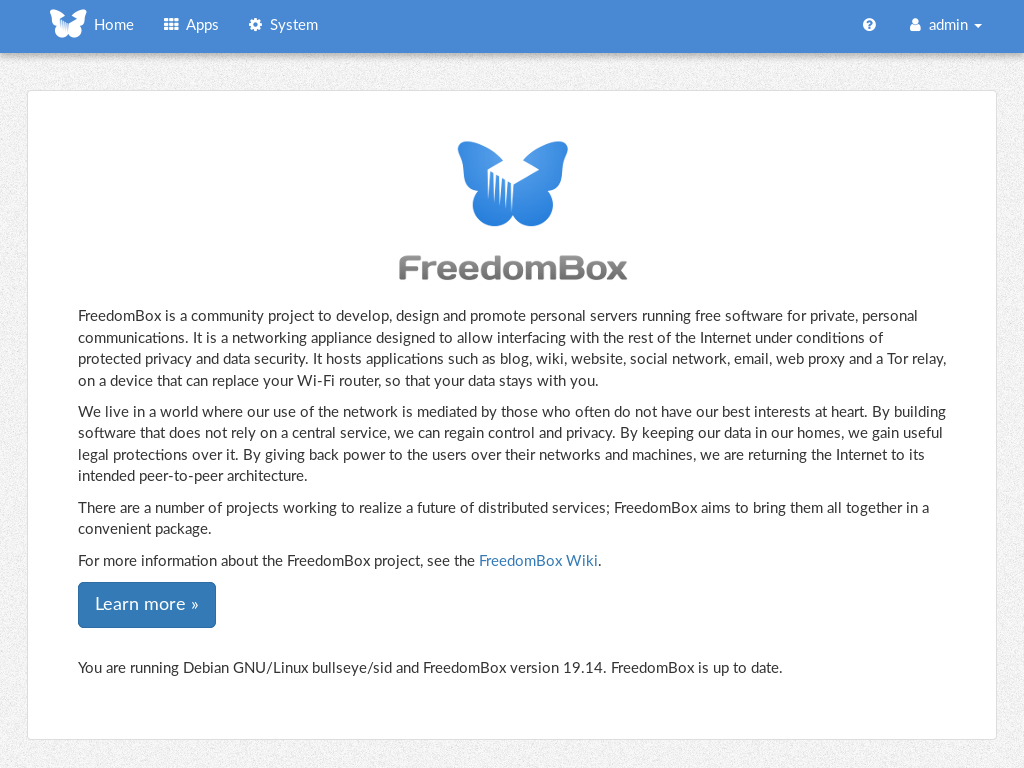
FreedomBox is a community project to develop, design and promote personal servers running free software for private, personal communications. It is a networking appliance designed to allow interfacing with the rest of the Internet under conditions of protected privacy and data security. It hosts applications such as blog, wiki, website, social network, email, web proxy and a Tor relay, on a device that can replace your Wi-Fi router, so that your data stays with you.
This module, called FreedomBox Service and also know as Plinth, is the core functionality and web interface to the functions of the FreedomBox. It is extensible and provides various applications of FreedomBox as modules. Each module or application provides simplified user interface to control the underlying functionality. As FreedomBox can act as a wireless router, it is possible to configure networking. It also allows configuration of basic system parameters such as time zone, hostname and automatic upgrades.
You can find more information about FreedomBox Service (Plinth) on the Plinth Wiki page, the FreedomBox Wiki and the FreedomBox Manual.
Getting Started
To have a running FreedomBox, first install Debian (Buster or higher) on a clean machine. Then run:
$ sudo apt install freedombox
Full instructions are available on FreedomBox Manual's QuickStart page.
For instructions on running the service on a local machine from source code, see INSTALL.md. For instructions on setting up for development purposes, see HACKING.md.
Contributing
See the HACKING.md file for contributing to FreedomBox Service (Plinth).
Localization