 87aac86782
Fixes: #2271

When domain name is updated, it usually results in a error page as the HTTP
connection is broken in the middle of a page load. This is due to apache
restarting in the middle of domain change operation by letsencrypt component.
This also leads to several functional tests failing. To fix this, ensure that
letsencrypt does a reload on the apache2 daemon instead of restarting it.

'reload' operation on apache2 triggers the command 'apachectl graceful'. It
ensures that currently running continue to serve the open HTTP connection until
the page load has been completed. After that those connections stop. Meanwhile,
the server reloads configuration (and apparently the related TLS certificates too).

Tests:

- Unit tests pass.
- When self-signed certificate is updated with 'make-ssl-cert
  generate-default-snakeoil --force-overwrite' and 'systemctl
  try-reload-or-restart apache2' is called, the new certificate is loaded by
  apache2. Browser shows the untrusted certificate warning again. The
  certificate information in the connection details has been updated.

Signed-off-by: Sunil Mohan Adapa <sunil@medhas.org>
Reviewed-by: Veiko Aasa <veiko17@disroot.org>





FreedomBox Service (Plinth)
The core functionality and web front-end of FreedomBox.



Description
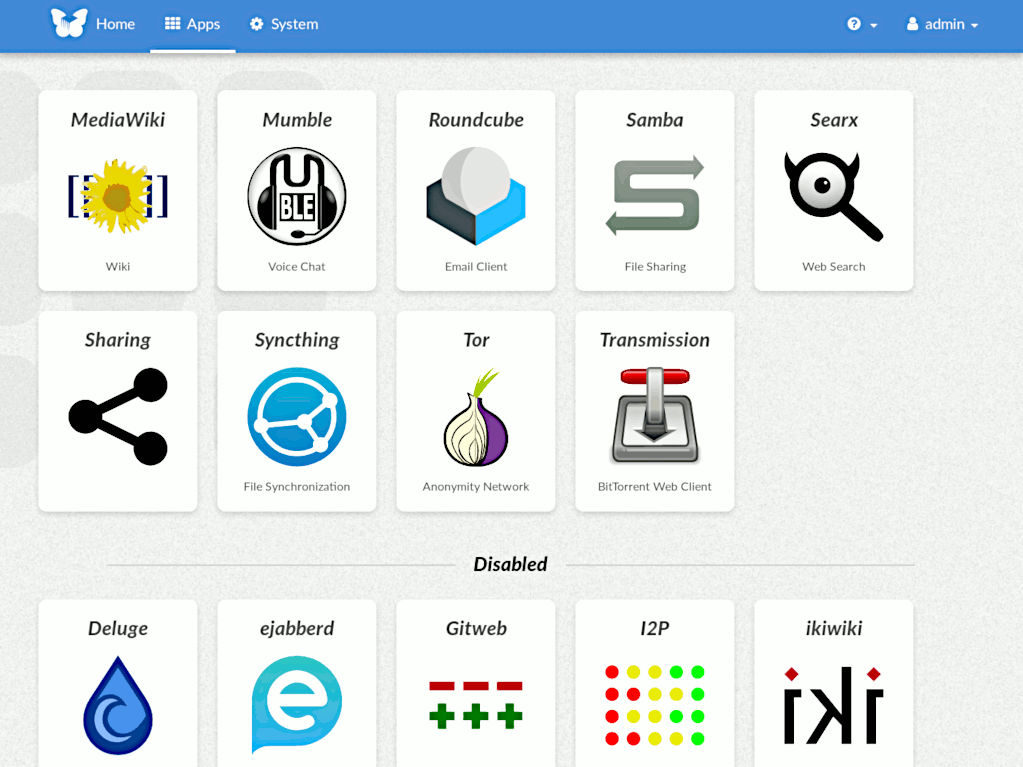
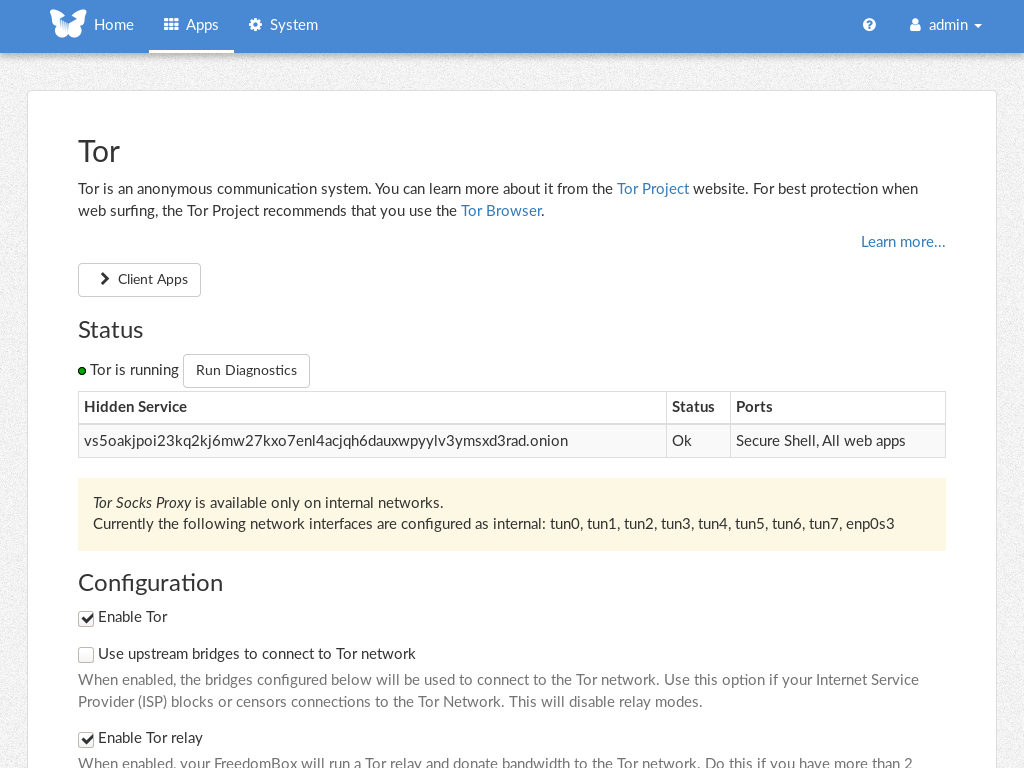
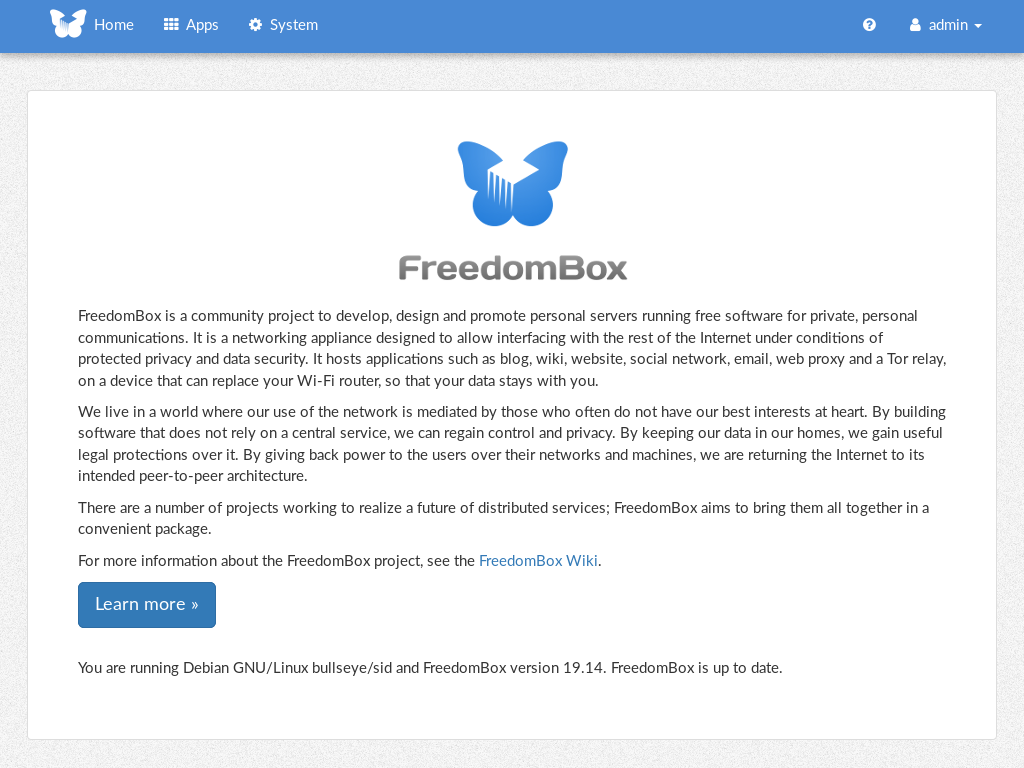
FreedomBox is a community project to develop, design and promote personal servers running free software for private, personal communications. It is a networking appliance designed to allow interfacing with the rest of the Internet under conditions of protected privacy and data security. It hosts applications such as blog, wiki, website, social network, email, web proxy and a Tor relay, on a device that can replace your Wi-Fi router, so that your data stays with you.
This module, called FreedomBox Service and also know as Plinth, is the core functionality and web interface to the functions of the FreedomBox. It is extensible and provides various applications of FreedomBox as modules. Each module or application provides simplified user interface to control the underlying functionality. As FreedomBox can act as a wireless router, it is possible to configure networking. It also allows configuration of basic system parameters such as time zone, hostname and automatic upgrades.
You can find more information about FreedomBox Service (Plinth) on the Plinth Wiki page, the FreedomBox Wiki and the FreedomBox Manual.
Getting Started
To have a running FreedomBox, first install Debian (Buster or higher) on a clean machine. Then run:
$ sudo apt install freedombox
Full instructions are available on FreedomBox Manual's QuickStart page.
For instructions on running the service on a local machine from source code, see INSTALL.md. For instructions on setting up for development purposes, see HACKING.md.
Contributing
See the HACKING.md file for contributing to FreedomBox Service (Plinth).
Localization

License

FreedomBox is distributed under the GNU Affero General Public License, Version 3 or later. A copy of AGPLv3 is available from the Free Software Foundation.