 bd656386b9
Add Full Text Search capability to Dovecot.
- Add 'dovecot-fts-xapian' to the list of packages for the email app.
- Add relevant configs for both dovecot 2.3 and 2.4
- Add a systemd timer to periodically clean search indexes

Configurations taken from plugin's upstream documentation:
https://github.com/grosjo/fts-xapian

Sunil:

- Tweak the dovecot 2.4 configuration. Remove explicit configuration same as or
close to default values.

- Drop the timer service for cleaning up the index. Dovecot documentation that
FTS plugins do it themselves.

- Drop the re-indexing command on setup. This could not be properly tested. On
first search, indexes will be created for mailboxes that don't have them.

Tests done:

- Perform a fresh install, on both Bookworm and Trixie, confirm the install is
successful, confirm the systemd service runs with exit 0.

- On Bookworm, apply the patches on an existing setup, confirm the patches apply
as expected.

- On a production like setup, set dovecot 2.4 to debug mode and check the
journal logs while receiving an email: The logs confirm that the fts module is
loaded and that it automatically creates a db for the indexes. I also opened the
newly created db file with less and confirmed that the human readable parts
contain my recent email.

- Using Sogo, perform a full search (including headers and body). Search works
and indexes are freshly created on all the folders.

Signed-off-by: Benedek Nagy <contact@nbenedek.me>
Signed-off-by: Sunil Mohan Adapa <sunil@medhas.org>
Reviewed-by: Sunil Mohan Adapa <sunil@medhas.org>





FreedomBox Service (Plinth)
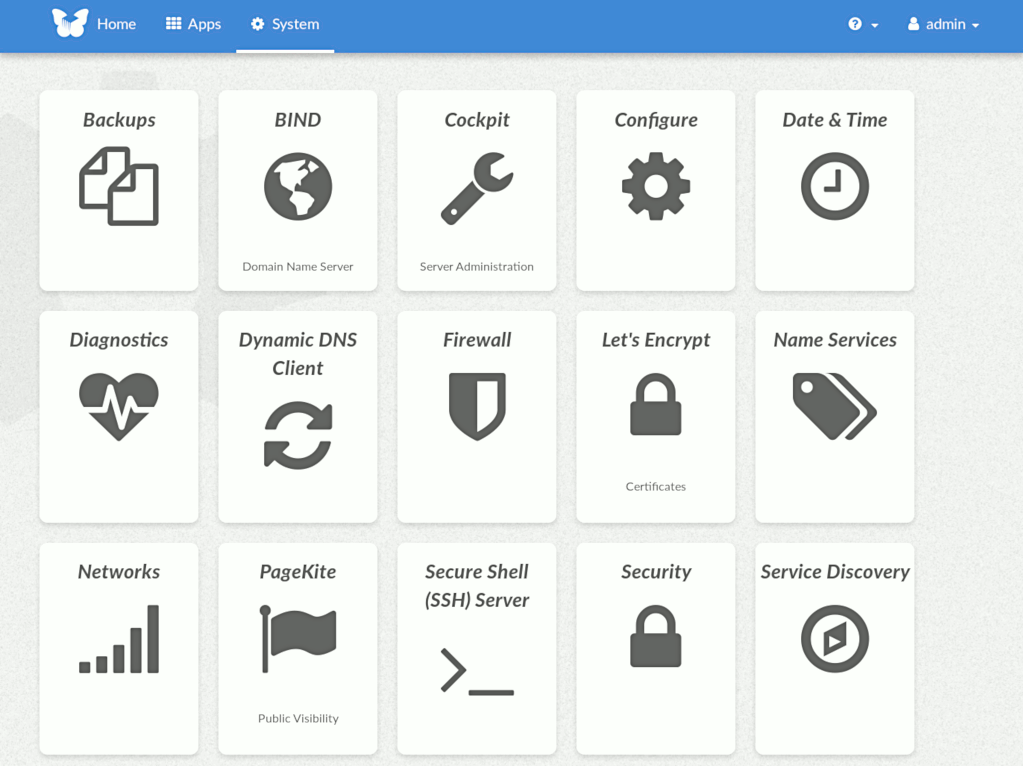
The core functionality and web front-end of FreedomBox.




Description
FreedomBox is a community project to develop, design and promote personal servers running free software for private, personal communications. It is a networking appliance designed to allow interfacing with the rest of the Internet under conditions of protected privacy and data security. It hosts applications such as blog, wiki, website, social network, email, web proxy and a Tor relay, on a device that can replace your Wi-Fi router, so that your data stays with you.
This module, called FreedomBox Service and also know as Plinth, is the core functionality and web interface to the functions of the FreedomBox. It is extensible and provides various applications of FreedomBox as modules. Each module or application provides simplified user interface to control the underlying functionality. As FreedomBox can act as a wireless router, it is possible to configure networking. It also allows configuration of basic system parameters such as time zone, hostname and automatic upgrades.
You can find more information about FreedomBox Service (Plinth) on the Plinth Wiki page, the FreedomBox Wiki and the FreedomBox Manual.
Getting Started
To have a running FreedomBox, first install Debian (Buster or higher) on a clean machine. Then run:
$ sudo apt install freedombox
Full instructions are available on FreedomBox Manual's QuickStart page.
For instructions on running the service on a local machine from source code, see INSTALL.md. For instructions on setting up for development purposes, see HACKING.md.
Contributing
See the HACKING.md file for contributing to FreedomBox Service (Plinth).
Localization

License

FreedomBox is distributed under the GNU Affero General Public License, Version 3 or later. A copy of AGPLv3 is available from the Free Software Foundation.