efa615201b
- Use php-fpm instead of using mod-php.

- Create database and setup permissions manually. Tables and initial data are
created during the initial setup process done by WordPress. Database upgrades
are handled by WordPress. Minor versions are upgraded automatically and major
version need user intervention.

- Backup/restore functionality including database.

- Install recommended extensions for performance.

- Setup and run cron jobs to ensure that scheduled publications are
completed (among other things). Service has systemd security features. Timer is
set to run every 10 minutes.

- Functional tests for adding/removing posts and backup/restore.

- Increase file upload size limit to 128MiB.

- A private mode (default) for keeping the setup process secure. Should be
disabled after first setup is completed. This uses a new approach using
file-based flag for different Apache configurations.

TODO:

- Find a nice way to allow WordPress to upload plugins/themes. Currently this
operation files and users are expected to manually scp the files to
/var/lib/wordpress/wp-content/{plugins,themes} directory.

Tests:

- Functional tests.

- Schedule publishing of a post. Notice that post got published.

- Test uploading a file larger than 2MiB.

- Test enabling permalinks. This leads to nicer looking URLs.

- Test adding images to posts/pages.

Signed-off-by: Sunil Mohan Adapa <sunil@medhas.org>
Reviewed-by: James Valleroy <jvalleroy@mailbox.org>





FreedomBox Service (Plinth)
The core functionality and web front-end of FreedomBox.



Description
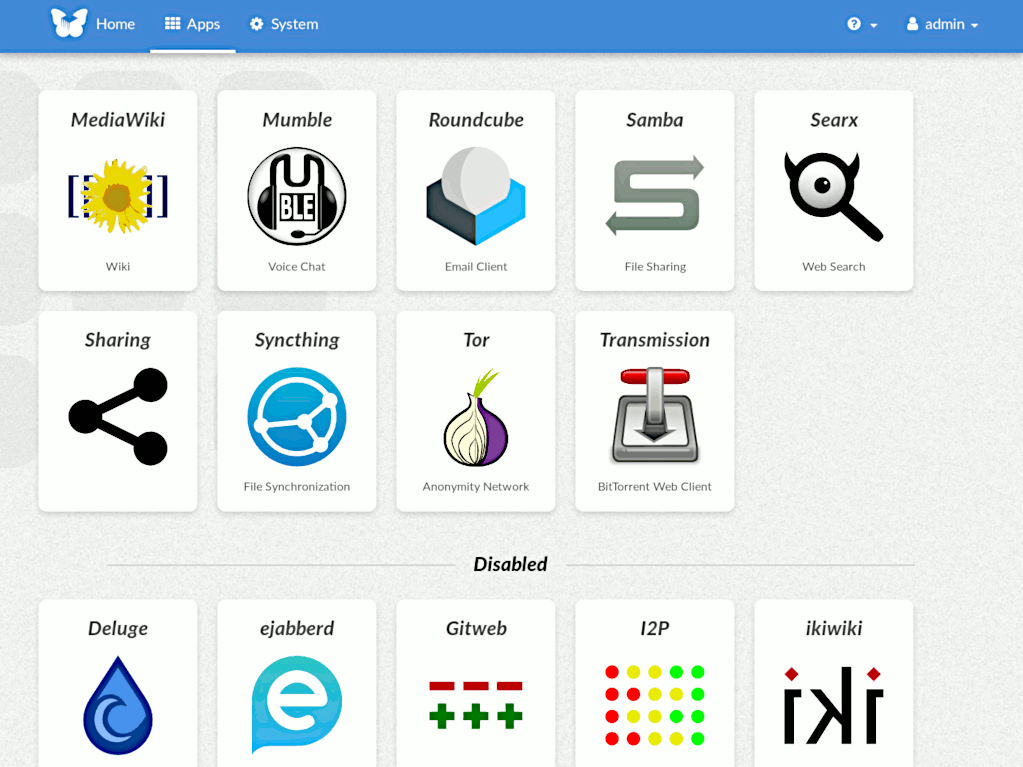
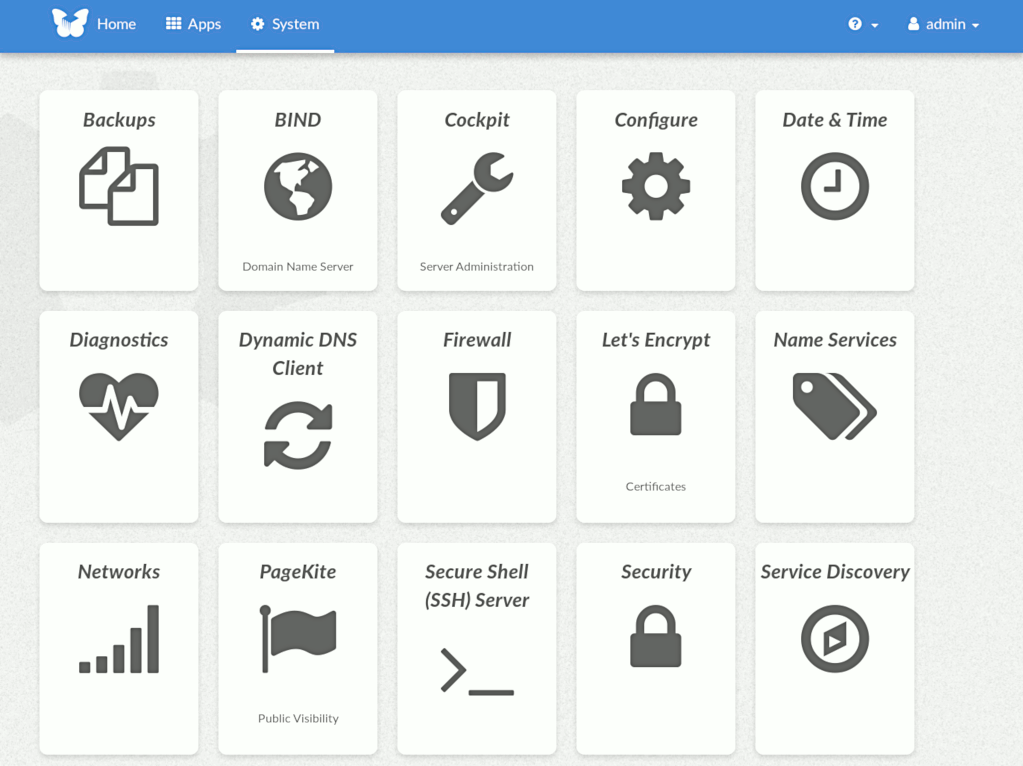
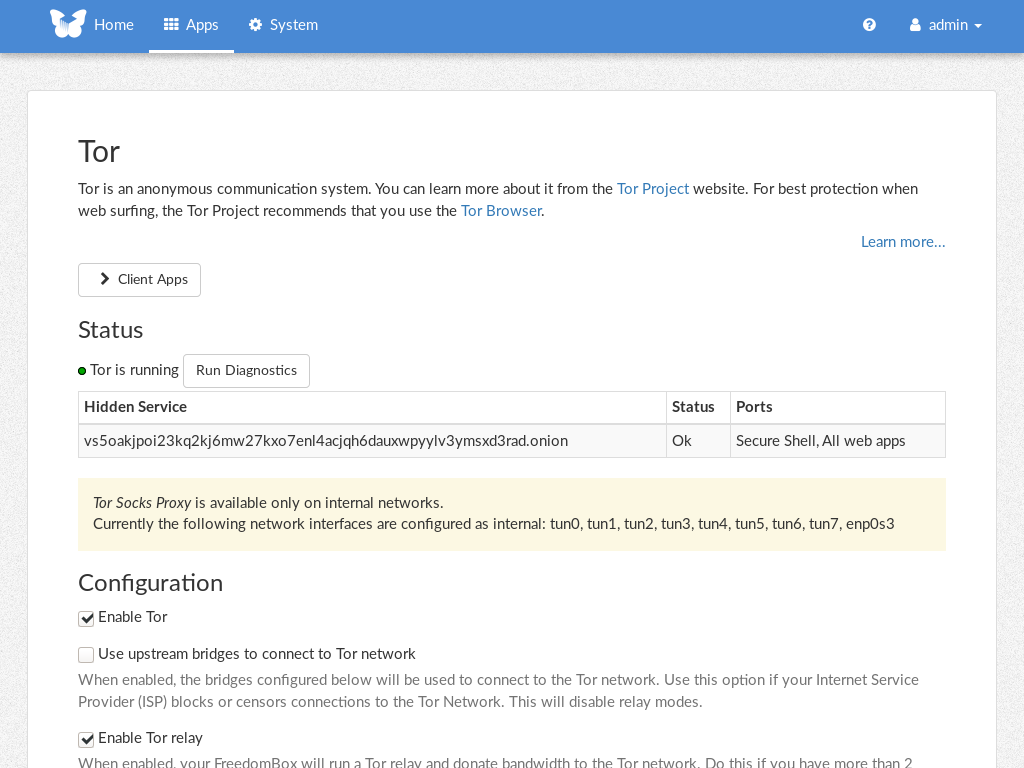
FreedomBox is a community project to develop, design and promote personal servers running free software for private, personal communications. It is a networking appliance designed to allow interfacing with the rest of the Internet under conditions of protected privacy and data security. It hosts applications such as blog, wiki, website, social network, email, web proxy and a Tor relay, on a device that can replace your Wi-Fi router, so that your data stays with you.
This module, called FreedomBox Service and also know as Plinth, is the core functionality and web interface to the functions of the FreedomBox. It is extensible and provides various applications of FreedomBox as modules. Each module or application provides simplified user interface to control the underlying functionality. As FreedomBox can act as a wireless router, it is possible to configure networking. It also allows configuration of basic system parameters such as time zone, hostname and automatic upgrades.
You can find more information about FreedomBox Service (Plinth) on the Plinth Wiki page, the FreedomBox Wiki and the FreedomBox Manual.
Getting Started
To have a running FreedomBox, first install Debian (Buster or higher) on a clean machine. Then run:
$ sudo apt install freedombox
Full instructions are available on FreedomBox Manual's QuickStart page.
For instructions on running the service on a local machine from source code, see INSTALL.md. For instructions on setting up for development purposes, see HACKING.md.
Contributing
See the HACKING.md file for contributing to FreedomBox Service (Plinth).
Localization