17db7d4077
CI builds were failing at random with:

    buildx failed with: toomanyrequests: Rate exceeded

The 429 comes from public.ecr.aws, not Docker Hub. AWS caps unauthenticated
ECR Public pulls at 1 per second per source IP (authenticated: 10/s). The
build matrix starts 11 jobs at once and each resolves 4 base images, so
roughly 44 anonymous pulls land in a couple of seconds — from GitHub runner
IPs that are shared with every other GitHub customer.

Measured against public.ecr.aws with an anonymous token, 60 requests at
concurrency 30 returned 31x 429 in 0.48s.

The same probe against mirror.gcr.io (Google's Docker Hub pull-through
cache) returned zero errors: 750 manifest requests up to ~141 req/s, plus
120 layer blob requests at concurrency 60. Google publishes no rate limit
for it, so this is measured headroom, not a contract — but it is roughly
10x the pipeline's peak rate, and cached pulls do not count against Docker
Hub's limits either.

Authenticating to ECR Public was the alternative. It was rejected because
10 pulls/s is still under the ~44-pull burst, it needs an AWS account plus
a secret, and secrets never reach fork pull requests — so forks would keep
failing. The mirror fixes forks too.

Verified buildkit honours the mirror block by routing a build through a
local logging registry: all 6 requests (manifests and blobs) hit the mirror,
none went to Docker Hub directly. Confirmed mirror.gcr.io answers 200 for
buildkit's "?ns=docker.io" query form on all four images, for both GET and
HEAD. Confirmed buildkit falls back to Docker Hub when the mirror is
unreachable — the build still succeeds, but the resolve takes ~30s instead
of ~0.3s, so a mirror outage means slow builds, not broken ones. The
existing Docker Hub login covers that fallback on main-repo runs.

msitools.dockerfile is only used by the local `make docker-msi` target, but
is switched over too so no ECR Public reference is left behind.

Navidrome Music Server 








Navidrome is an open source web-based music collection server and streamer. It gives you freedom to listen to your music collection from any browser or mobile device. It's like your personal Spotify!
Note: The master branch may be in an unstable or even broken state during development.
Please use releases instead of
the master branch in order to get a stable set of binaries.
Check out our Live Demo!
Any feedback is welcome! If you need/want a new feature, find a bug or think of any way to improve Navidrome, please file a GitHub issue or join the discussion in our Subreddit. If you want to contribute to the project in any other way (ui/backend dev, translations, themes), please join the chat in our Discord server.
Installation
See instructions on the project's website
Cloud Hosting
PikaPods has partnered with us to offer you an officially supported, cloud-hosted solution. A share of the revenue helps fund the development of Navidrome at no additional cost for you.

Features
- Handles very large music collections
- Streams virtually any audio format available
- Reads and uses all your beautifully curated metadata
- Great support for compilations (Various Artists albums) and box sets (multi-disc albums)
- Multi-user, each user has their own play counts, playlists, favourites, etc...
- Very low resource usage
- Multi-platform, runs on macOS, Linux and Windows. Docker images are also provided
- Ready to use binaries for all major platforms, including Raspberry Pi
- Automatically monitors your library for changes, importing new files and reloading new metadata
- Supports lyrics from sidecar .ttml, .yaml/.yml Lyricsfile, .elrc, .lrc, .srt, .txt files and embedded TTML, Enhanced LRC, LRC, SRT, and plain-text tags (via
lyricspriority) - Themeable, modern and responsive Web interface based on Material UI
- Compatible with all Subsonic/Madsonic/Airsonic clients
- Transcoding on the fly. Can be set per user/player. Opus encoding is supported
- Translated to various languages
Translations
Navidrome uses POEditor for translations, and we are always looking for more contributors
Documentation
All documentation can be found in the project's website: https://www.navidrome.org/docs. Here are some useful direct links:
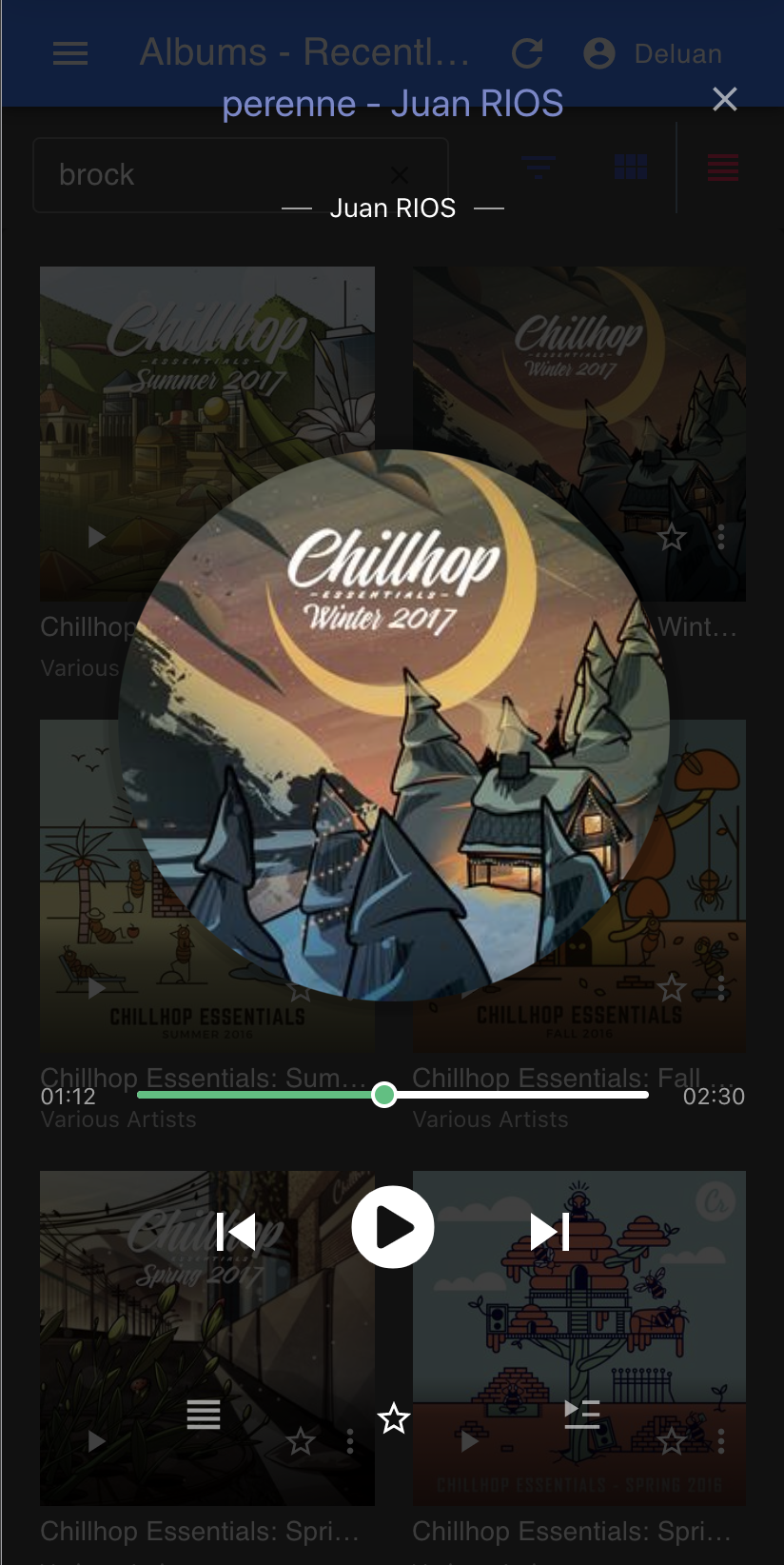
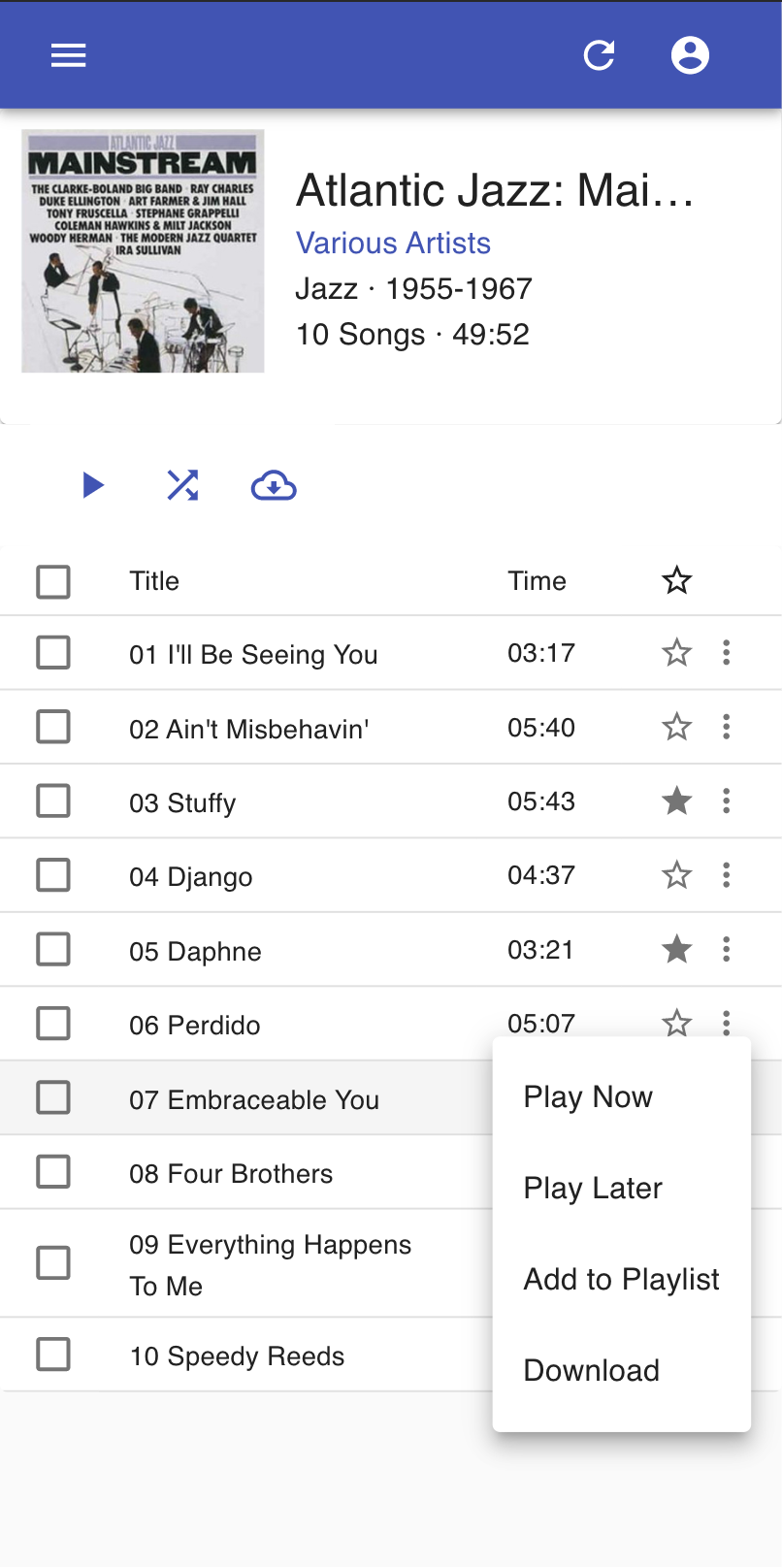
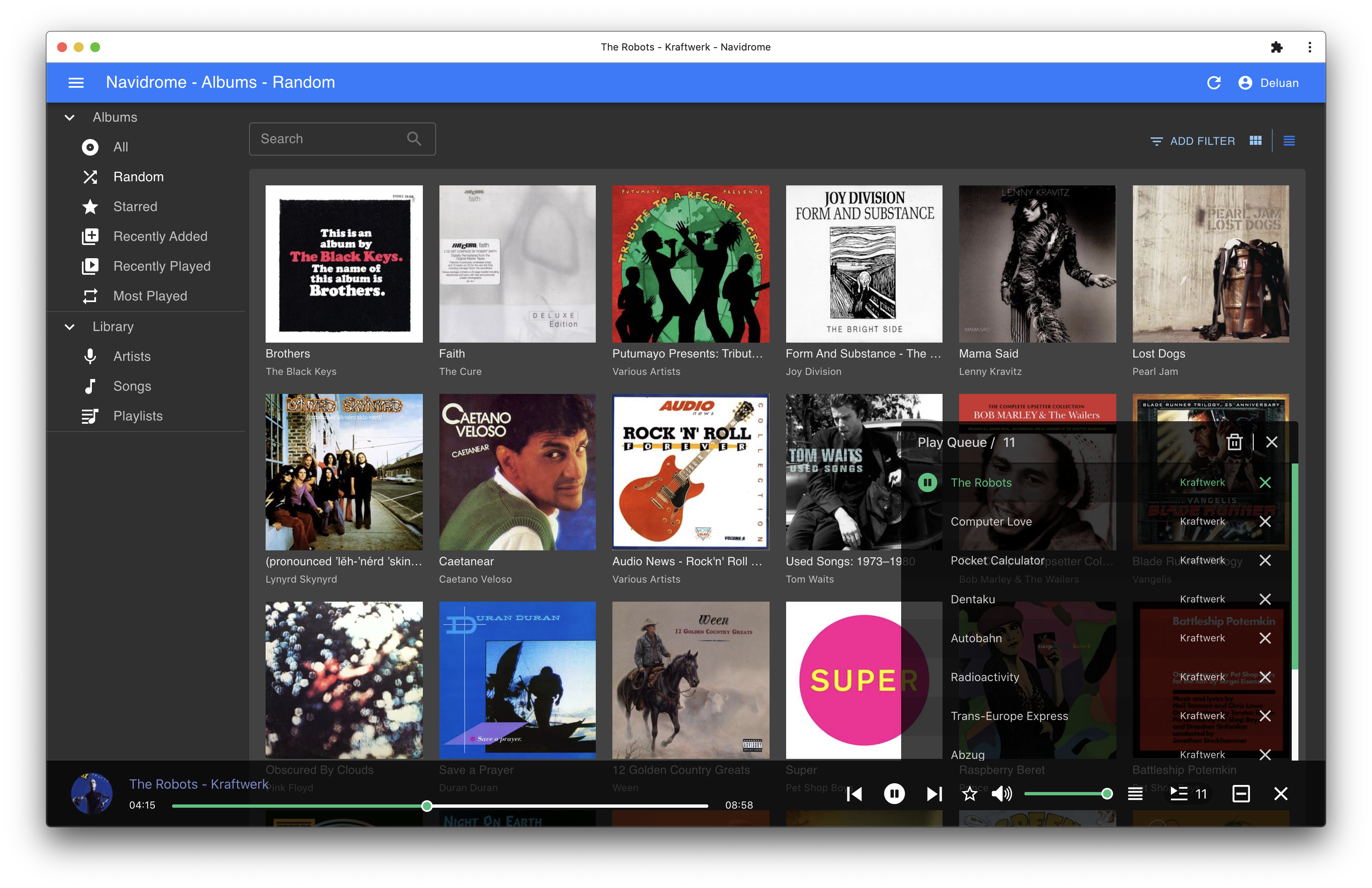
Screenshots