295886cb9a
* feat(artwork): report what a config-fingerprint backfill enqueued

A backfill re-resolves every entity, and on a large library that is tens of thousands of
external agent calls. It announced itself with a single line carrying nothing but an elapsed
time, so the size of the job was invisible until the request volume showed up hours later.

Log the item count, the per-kind breakdown, and a ceiling on the external lookups the queued
work can cost. The ceiling reuses ExternalLookupsPerItem, the same estimator behind the
`artwork reprocess` preview, so the two agree on what an item can cost.

backfill now returns a summary instead of a bare bool, which keeps the counts assertable
without capturing log output. Worker.Backfill keeps its (bool, error) signature, so its caller
is unchanged, and it reads the agent count off its own resolver.

* refactor(artwork): share the image-agent count and take it lazily

Counting image agents was written twice, once in the CLI for the `artwork reprocess` preview and
again as a resolver method for the backfill log. Two copies of "which agents count as image
agents" can drift, and the CLI estimate and the server log would then disagree silently.

Move the derivation next to the type it builds, as NewImageAgentCount, and call it from both.
The resolver method goes away with it: hanging the census on the resolver forced two nil guards
that its only caller could never trigger, because Worker always builds a resolver with agents.
The Worker keeps the *agents.Agents it is already handed instead of reaching through the
processor and resolver to find it.

Pass the count as a func. Building the agent list constructs every enabled agent (each one an
HTTP client and a cache goroutine) only to take its length, and a backfill returns early on an
unchanged fingerprint, which is what happens on nearly every restart.

* docs(artwork): say what the backfill lookup estimate does not bound

The comment called the number a ceiling, which the CLI comment on the same estimate already
contradicts: externalEstimate "claims no bound". Both are right about the local-source case and
only one of them mentions that a retried item asks its agents again.

Navidrome Music Server 








Navidrome is an open source web-based music collection server and streamer. It gives you freedom to listen to your music collection from any browser or mobile device. It's like your personal Spotify!
Note: The master branch may be in an unstable or even broken state during development.
Please use releases instead of
the master branch in order to get a stable set of binaries.
Check out our Live Demo!
Any feedback is welcome! If you need/want a new feature, find a bug or think of any way to improve Navidrome, please file a GitHub issue or join the discussion in our Subreddit. If you want to contribute to the project in any other way (ui/backend dev, translations, themes), please join the chat in our Discord server.
Installation
See instructions on the project's website
Cloud Hosting
PikaPods has partnered with us to offer you an officially supported, cloud-hosted solution. A share of the revenue helps fund the development of Navidrome at no additional cost for you.

Features
- Handles very large music collections
- Streams virtually any audio format available
- Reads and uses all your beautifully curated metadata
- Great support for compilations (Various Artists albums) and box sets (multi-disc albums)
- Multi-user, each user has their own play counts, playlists, favourites, etc...
- Very low resource usage
- Multi-platform, runs on macOS, Linux and Windows. Docker images are also provided
- Ready to use binaries for all major platforms, including Raspberry Pi
- Automatically monitors your library for changes, importing new files and reloading new metadata
- Supports lyrics from sidecar .ttml, .yaml/.yml Lyricsfile, .elrc, .lrc, .srt, .txt files and embedded TTML, Enhanced LRC, LRC, SRT, and plain-text tags (via
lyricspriority) - Themeable, modern and responsive Web interface based on Material UI
- Compatible with all Subsonic/Madsonic/Airsonic clients
- Transcoding on the fly. Can be set per user/player. Opus encoding is supported
- Translated to various languages
Translations
Navidrome uses POEditor for translations, and we are always looking for more contributors
Documentation
All documentation can be found in the project's website: https://www.navidrome.org/docs. Here are some useful direct links:
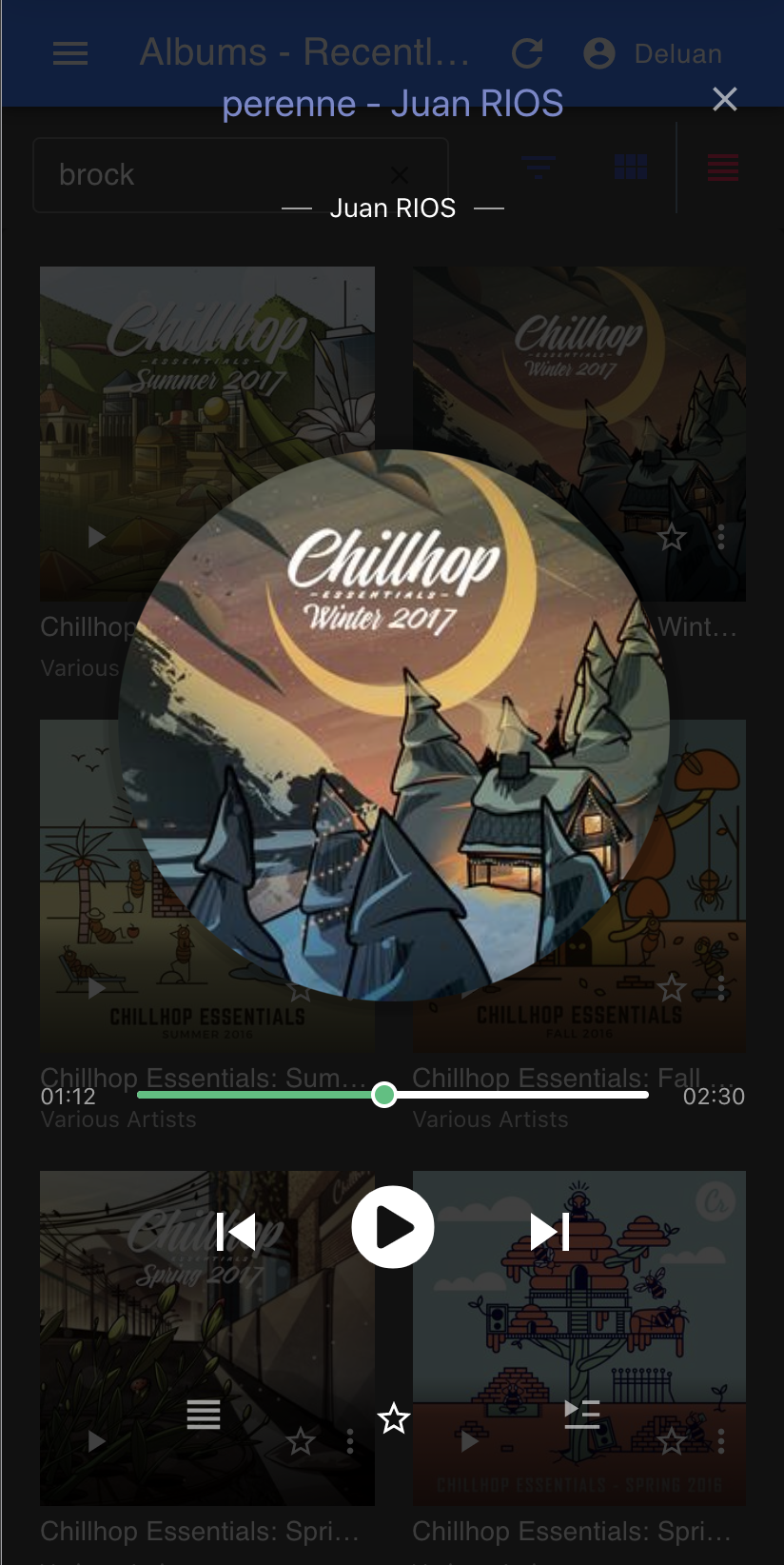
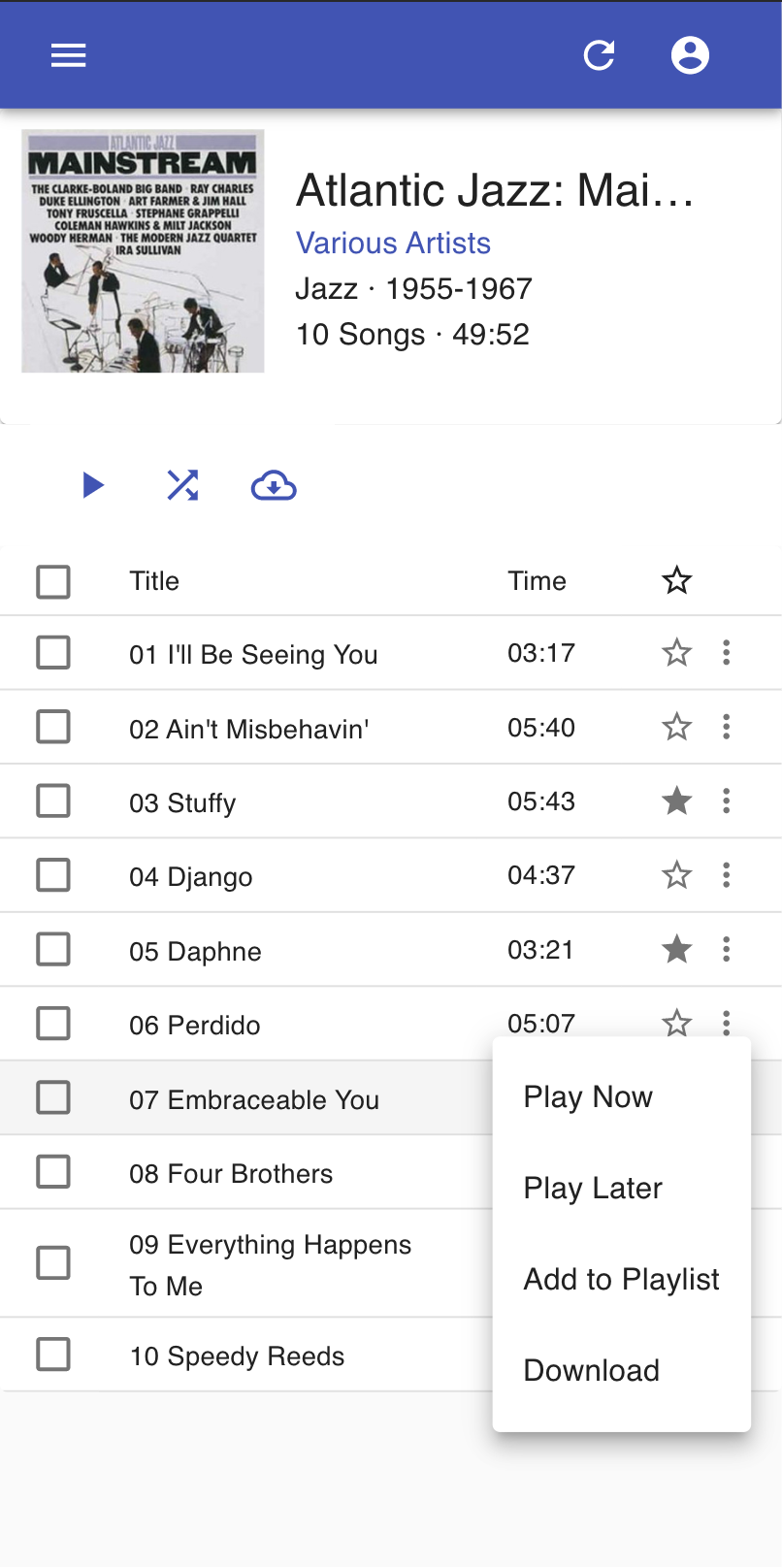
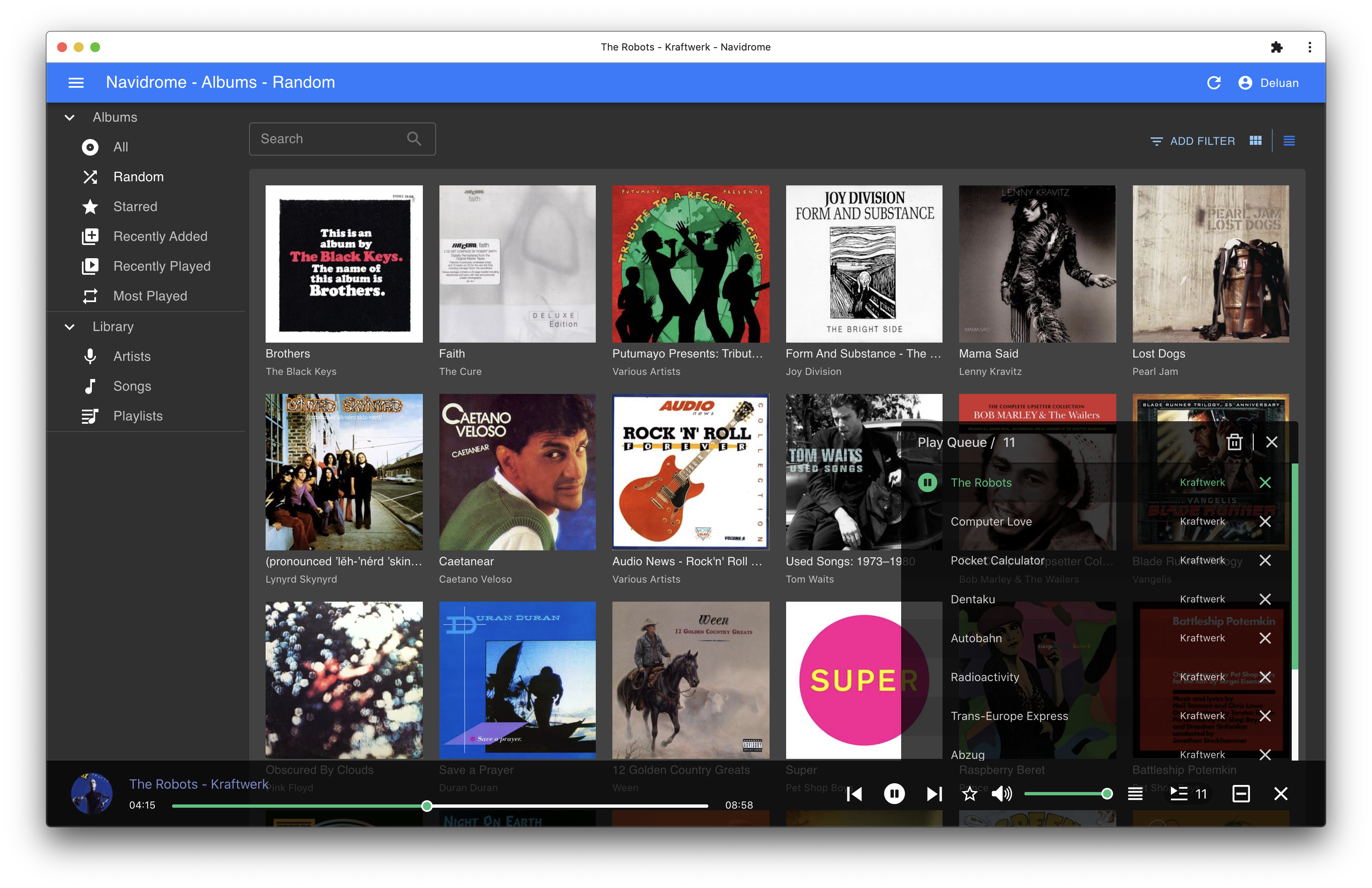
Screenshots