29f481cd7b
* feat(jellyfin): add LyricDto and lyrics mapper

* feat(jellyfin): advertise Lyric media stream for embedded lyrics

* feat(jellyfin): implement GET /Audio/{itemId}/Lyrics

* feat(jellyfin): advertise pipeline-resolved lyrics in PlaybackInfo

* feat(jellyfin): advertise server version 10.9.11 for client lyrics gates

* test(jellyfin): e2e coverage for lyrics endpoint and advertising

Seeds "Stairway To Heaven" with an embedded LRC lyric tag (lyrics:eng)
and covers PlaybackInfo's Lyric MediaStream, GET /Audio/{id}/Lyrics,
and the HasLyrics badge end to end.

Fixes a bug the new seed exposed: HasLyrics and the Lyric MediaStream
gate compared mf.Lyrics against "", but the persistence layer never
stores an empty string post-scan (it normalizes to the JSON sentinel
"[]"), so every track was reporting HasLyrics=true. Both call sites
now parse the column via StructuredLyrics()/LyricList.Main() instead.

* fix(jellyfin): cheap sentinel check for embedded lyrics advertising

* chore(jellyfin): trim over-budget comments in lyrics code

* test(jellyfin): cover lyrics pipeline error and nil-start cue skip

* docs(jellyfin): document lyrics support and follow-ups in README

* refactor(jellyfin): promote embedded-lyrics sentinel check to MediaFile

The "[]" no-lyrics sentinel is persistence-layer knowledge; expose it as
model.MediaFile.HasEmbeddedLyrics() instead of a dto-local helper. Also
dedupe the test lyrics-cache construction and pre-size the media stream
slice.

* refactor(jellyfin): consolidate tick conversions around one constant

ticksPerMillis is now the single source of the 100ns-tick unit; the
scrobble handlers' three inline /10_000 divisions become
dto.MillisFromTicks.

* fix(jellyfin): align lyric advertising with the serving predicate

PlaybackInfo advertised on any non-empty LyricList while the endpoint
404s when the main lyric has no lines; both now share servableLyric.
Handler tests also send hex-encoded ids to match real traffic.

* chore(jellyfin): drop unneeded lyrics package alias in e2e suite

Navidrome Music Server 








Navidrome is an open source web-based music collection server and streamer. It gives you freedom to listen to your music collection from any browser or mobile device. It's like your personal Spotify!
Note: The master branch may be in an unstable or even broken state during development.
Please use releases instead of
the master branch in order to get a stable set of binaries.
Check out our Live Demo!
Any feedback is welcome! If you need/want a new feature, find a bug or think of any way to improve Navidrome, please file a GitHub issue or join the discussion in our Subreddit. If you want to contribute to the project in any other way (ui/backend dev, translations, themes), please join the chat in our Discord server.
Installation
See instructions on the project's website
Cloud Hosting
PikaPods has partnered with us to offer you an officially supported, cloud-hosted solution. A share of the revenue helps fund the development of Navidrome at no additional cost for you.

Features
- Handles very large music collections
- Streams virtually any audio format available
- Reads and uses all your beautifully curated metadata
- Great support for compilations (Various Artists albums) and box sets (multi-disc albums)
- Multi-user, each user has their own play counts, playlists, favourites, etc...
- Very low resource usage
- Multi-platform, runs on macOS, Linux and Windows. Docker images are also provided
- Ready to use binaries for all major platforms, including Raspberry Pi
- Automatically monitors your library for changes, importing new files and reloading new metadata
- Supports lyrics from sidecar .ttml, .yaml/.yml Lyricsfile, .elrc, .lrc, .srt, .txt files and embedded TTML, Enhanced LRC, LRC, SRT, and plain-text tags (via
lyricspriority) - Themeable, modern and responsive Web interface based on Material UI
- Compatible with all Subsonic/Madsonic/Airsonic clients
- Transcoding on the fly. Can be set per user/player. Opus encoding is supported
- Translated to various languages
Translations
Navidrome uses POEditor for translations, and we are always looking for more contributors
Documentation
All documentation can be found in the project's website: https://www.navidrome.org/docs. Here are some useful direct links:
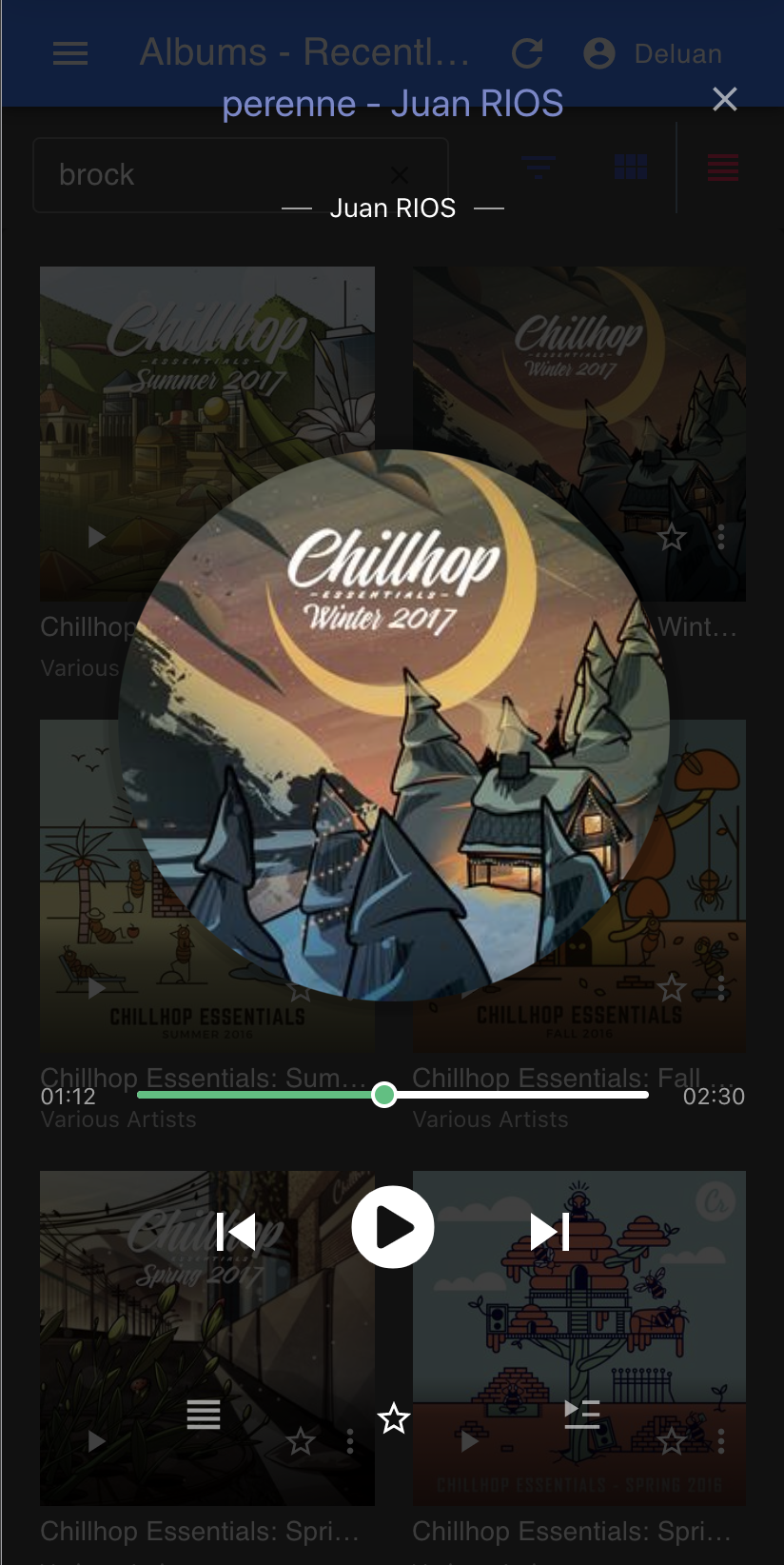
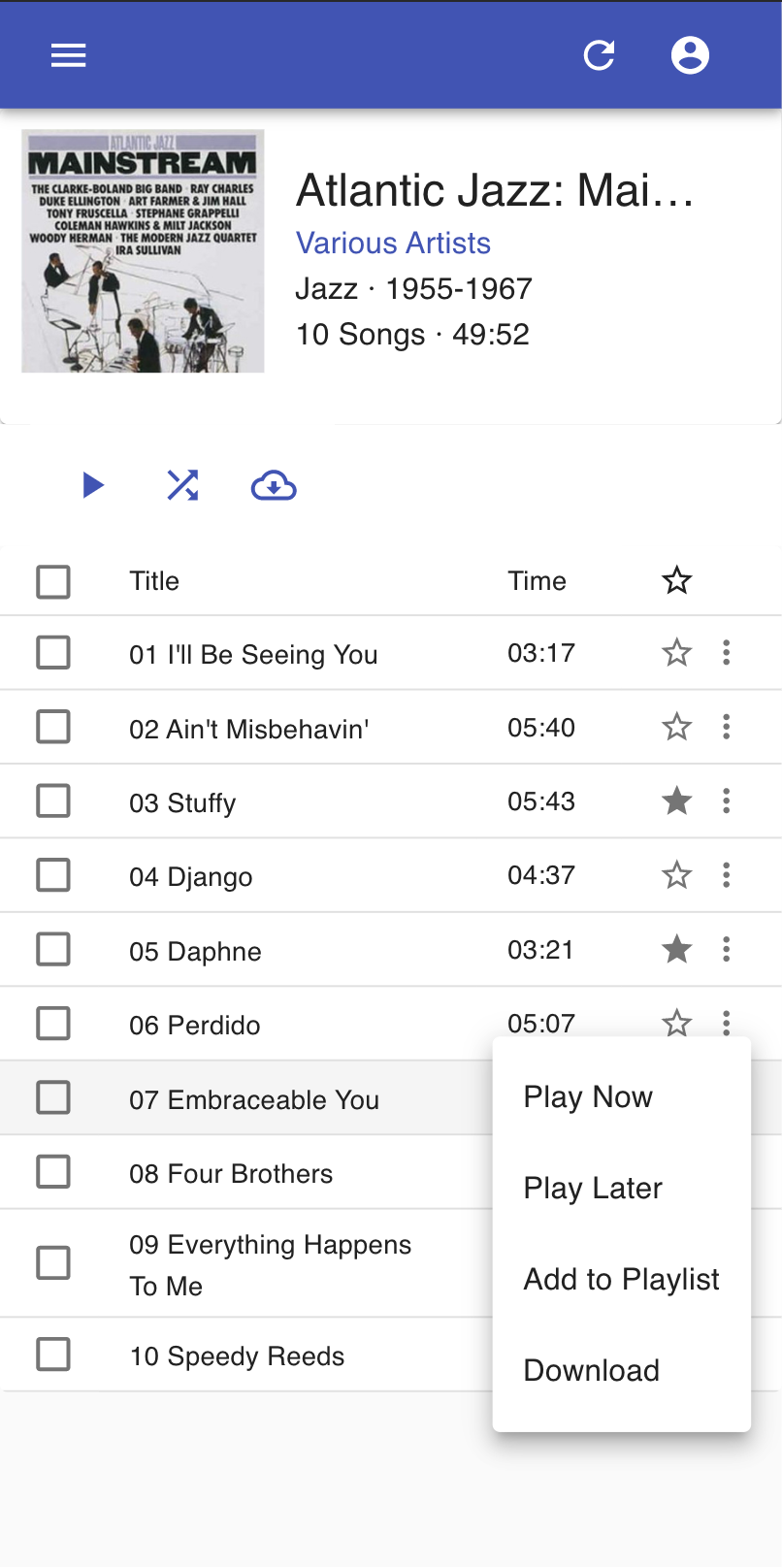
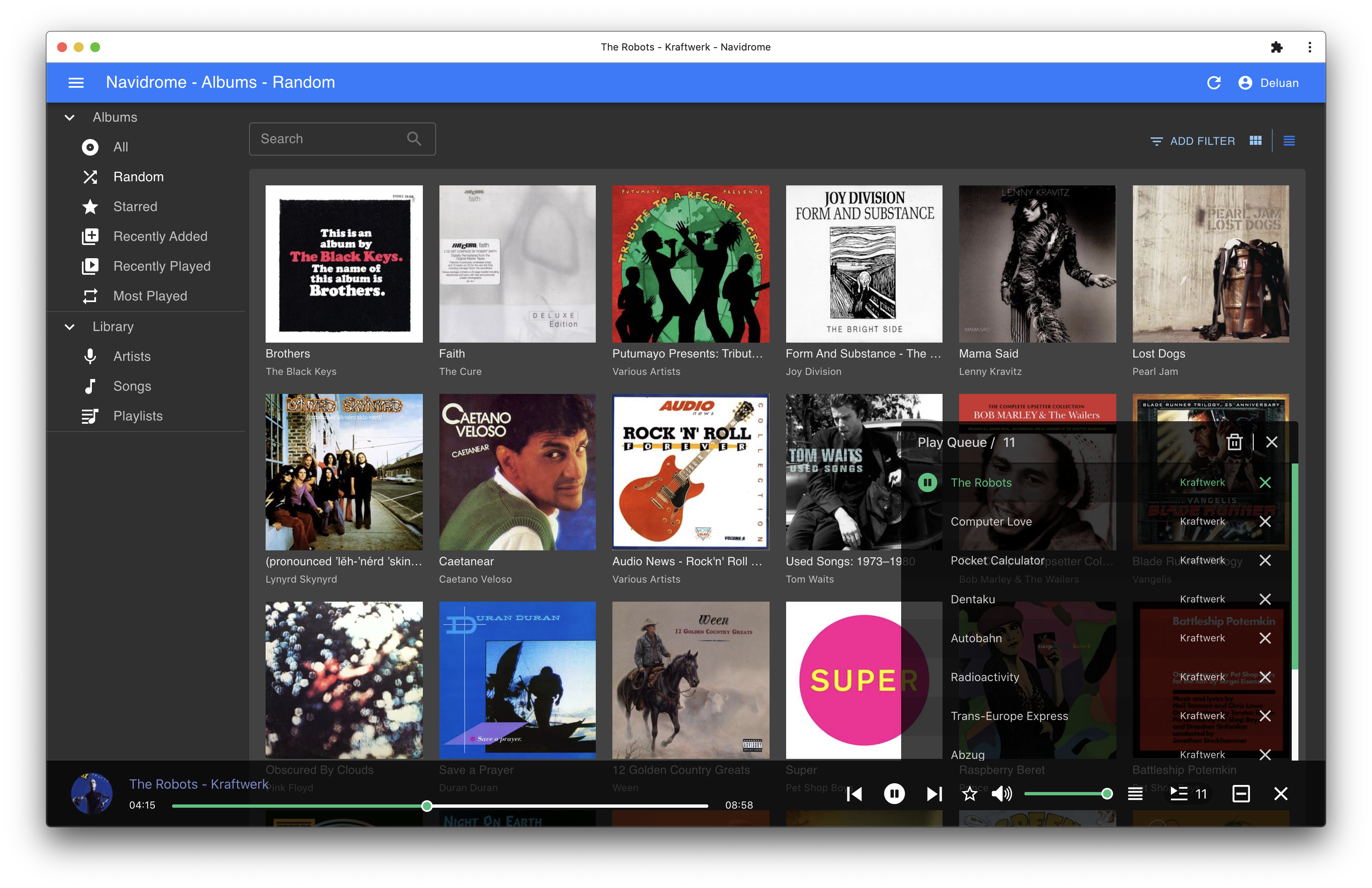
Screenshots