46041bb908
* ci: cache the plugins test suite WASM compilation across runs

The 'Test Go code' job was dominated by a single package: 'plugins' took
541s of the 699s test step. The suite builds 25 test plugins as full-Go
wasip1 modules of ~4.5MB each, and wazero must compile every one to machine
code. Under -race that compiler work is instrumented, so each module costs
around 11 seconds.

The suite already shared a wazero compilation cache, but three things kept it
from paying off. It lived in a fresh temp dir, so nothing survived the run.
The default plugins.cachesize of 200MB was smaller than the 334MB the cache
actually needs, so the purge evicted entries mid-run. And the wasm binaries
embedded VCS stamps, so every commit produced different bytes and missed the
content-addressed cache anyway.

Point CacheFolder at plugins/testdata/.wazero-cache, raise the test cache
limit past what the suite needs, build the test plugins with -buildvcs=false,
and restore the directory in CI. Locally the package goes from 256s to 74s
with the cache warm and the wasm rebuilt from scratch.

* ci: key the WASM cache on what actually changes the modules

The test plugins are separate Go modules with their own go.mod and go.sum;
they reach the PDK through a replace directive and never read the root
module. So the root go.sum has no bearing on the wasm bytes, and the wazero
version it pins is already namespaced by wazero itself, which stores entries
under wazero-<version>-<goarch>-<goos>. Keying on it only rotated the cache
on every unrelated dependency bump.

Drop it, and add the go.mod files that were missing: the test plugins' own
and the PDK's. The root go.mod stays, since it selects the toolchain that
builds the modules.

* ci: key the WASM cache on the toolchain version, not go.mod

Only the Go toolchain in the root go.mod affects the built wasm, but the file
also changes on every direct dependency bump, which would rotate the cache for
no reason. Take setup-go's go-version output instead: it is the version that
actually built the modules.

Navidrome Music Server 








Navidrome is an open source web-based music collection server and streamer. It gives you freedom to listen to your music collection from any browser or mobile device. It's like your personal Spotify!
Note: The master branch may be in an unstable or even broken state during development.
Please use releases instead of
the master branch in order to get a stable set of binaries.
Check out our Live Demo!
Any feedback is welcome! If you need/want a new feature, find a bug or think of any way to improve Navidrome, please file a GitHub issue or join the discussion in our Subreddit. If you want to contribute to the project in any other way (ui/backend dev, translations, themes), please join the chat in our Discord server.
Installation
See instructions on the project's website
Cloud Hosting
PikaPods has partnered with us to offer you an officially supported, cloud-hosted solution. A share of the revenue helps fund the development of Navidrome at no additional cost for you.

Features
- Handles very large music collections
- Streams virtually any audio format available
- Reads and uses all your beautifully curated metadata
- Great support for compilations (Various Artists albums) and box sets (multi-disc albums)
- Multi-user, each user has their own play counts, playlists, favourites, etc...
- Very low resource usage
- Multi-platform, runs on macOS, Linux and Windows. Docker images are also provided
- Ready to use binaries for all major platforms, including Raspberry Pi
- Automatically monitors your library for changes, importing new files and reloading new metadata
- Supports lyrics from sidecar .ttml, .yaml/.yml Lyricsfile, .elrc, .lrc, .srt, .txt files and embedded TTML, Enhanced LRC, LRC, SRT, and plain-text tags (via
lyricspriority) - Themeable, modern and responsive Web interface based on Material UI
- Compatible with all Subsonic/Madsonic/Airsonic clients
- Transcoding on the fly. Can be set per user/player. Opus encoding is supported
- Translated to various languages
Translations
Navidrome uses POEditor for translations, and we are always looking for more contributors
Documentation
All documentation can be found in the project's website: https://www.navidrome.org/docs. Here are some useful direct links:
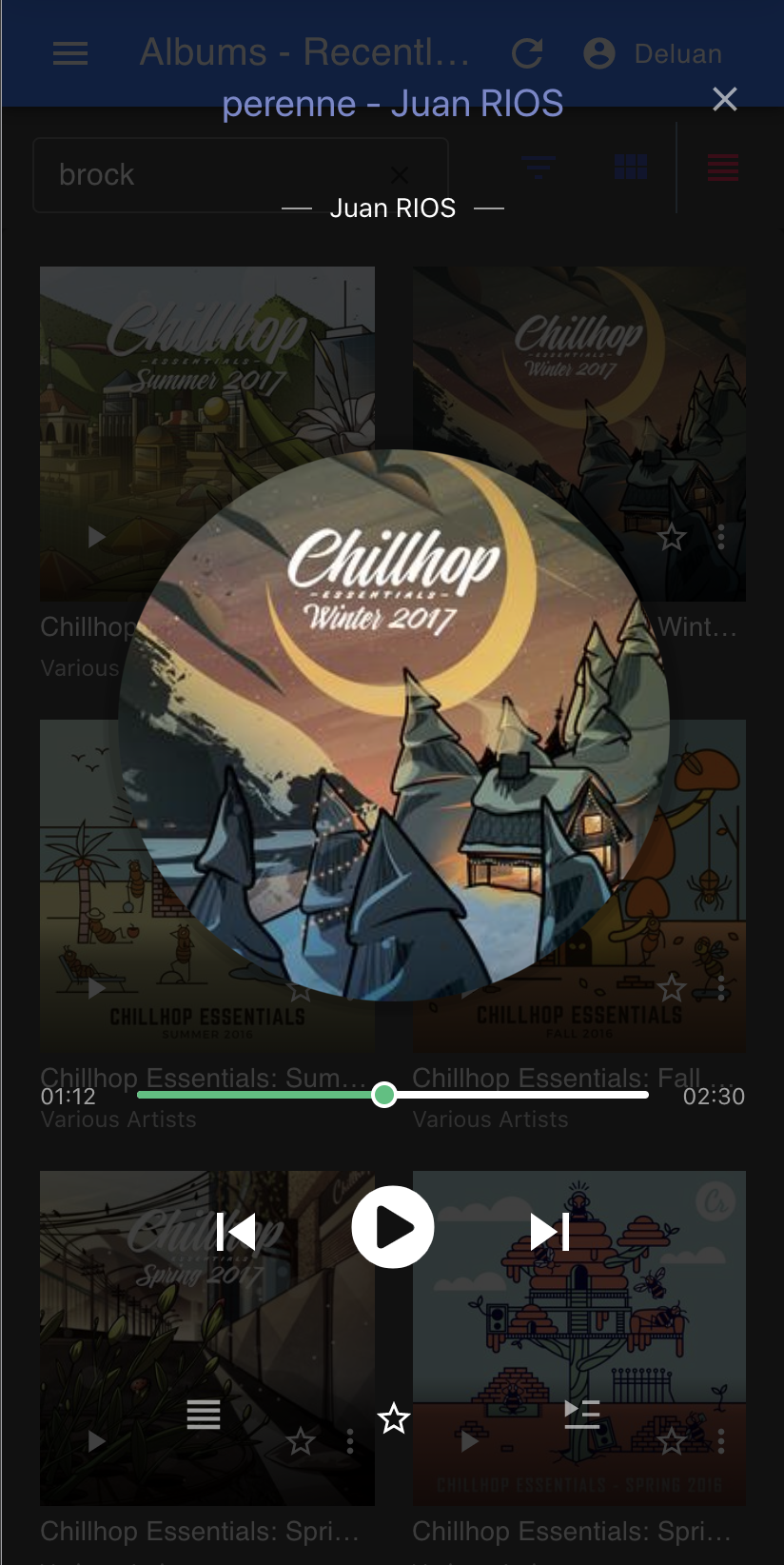
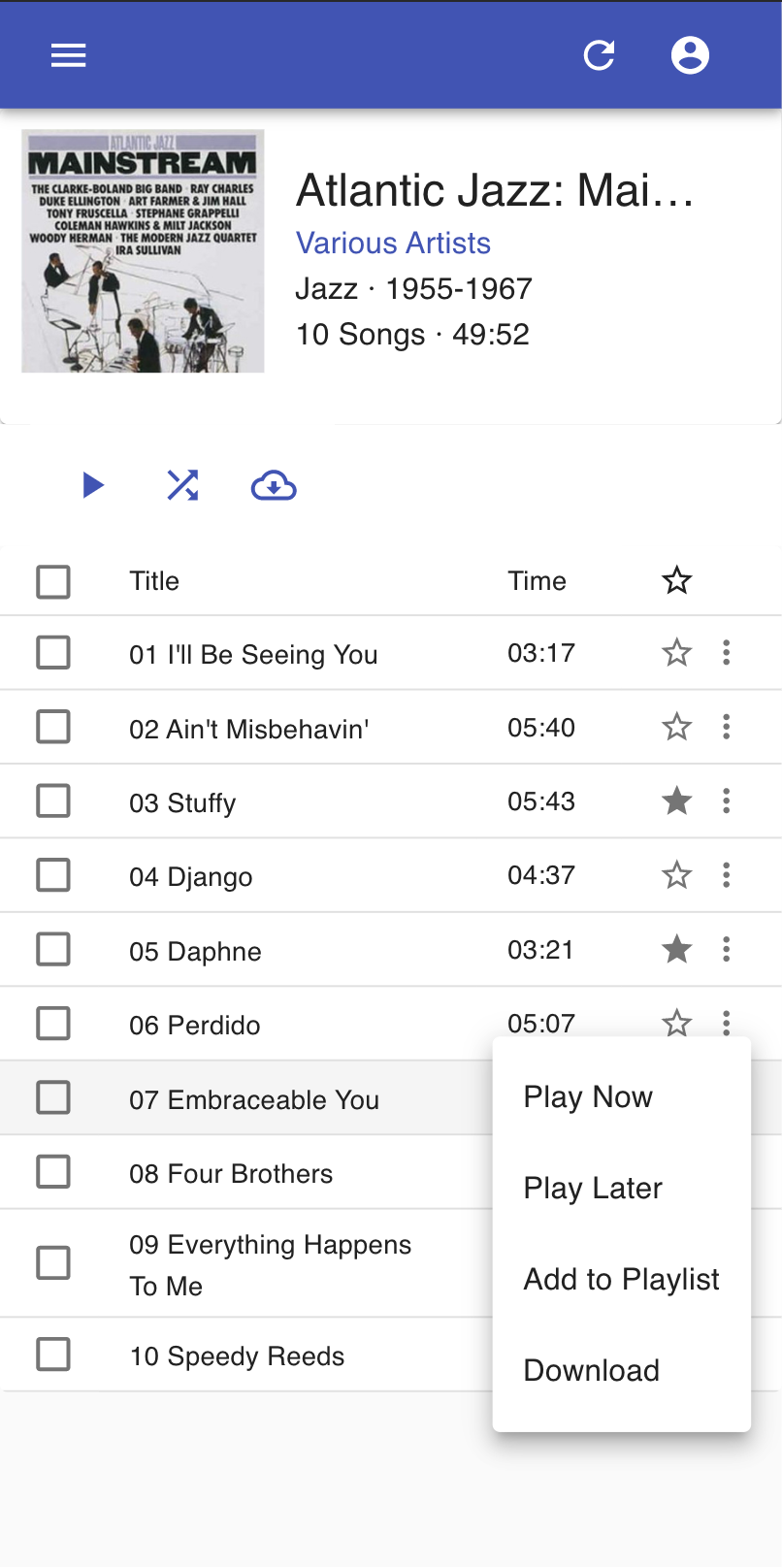
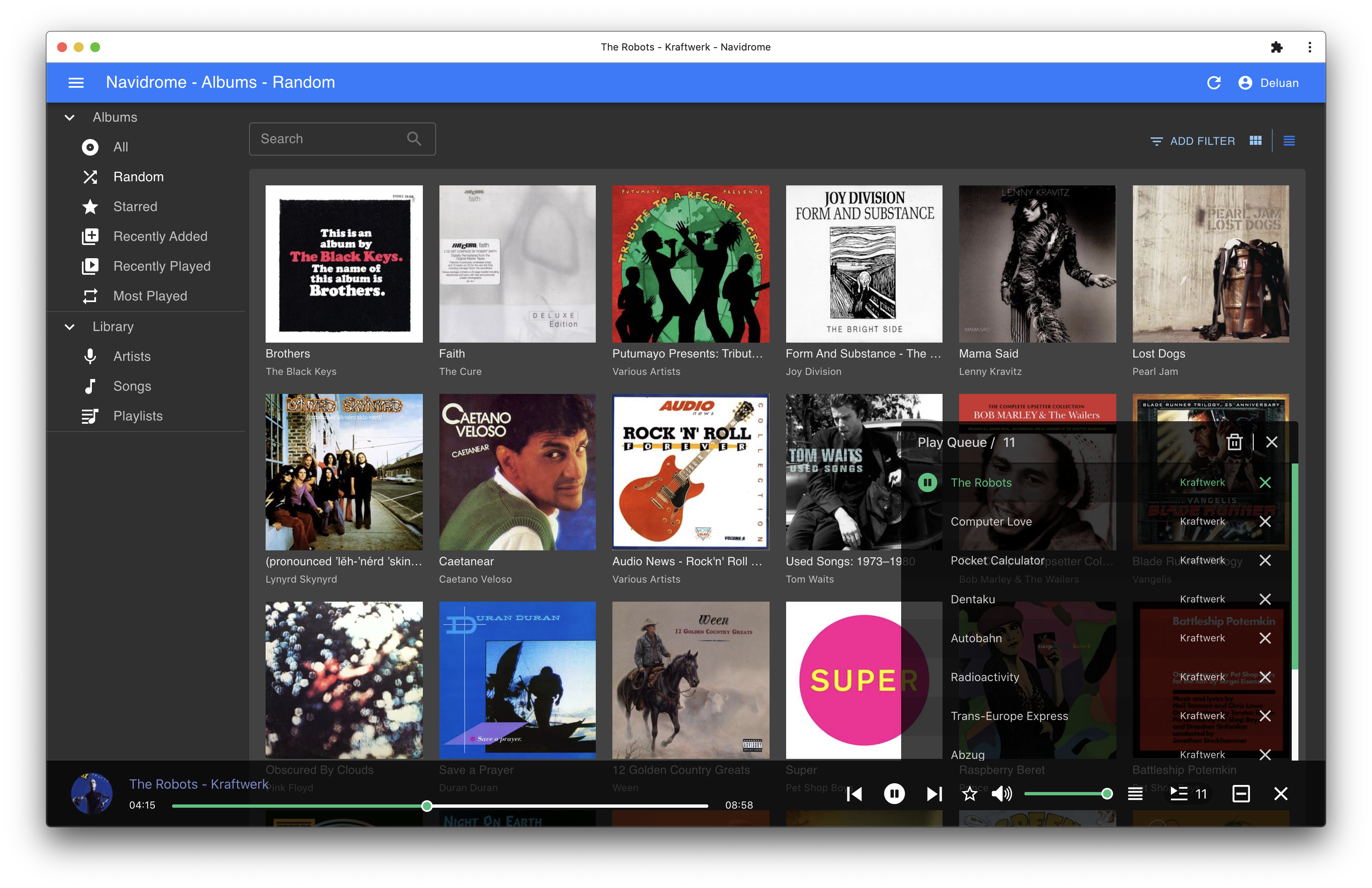
Screenshots