59a4ed8e79
* fix(plugins): stop reporting plugin call failures as not-found

MetadataAgent joined agents.ErrNotFound onto every failed plugin call, so a
transport fault was indistinguishable from a definitive miss. The artwork
circuit breaker treats a not-found as a successful, definitive answer and
resets its failure counter, so it never opened for a failing plugin and kept
calling it on every request. Observed with the apple-music plugin against
prod: ~900 iTunes 429s in 27 minutes with the breaker never tripping.

Return the underlying error instead. The genuine empty-result branches still
return agents.ErrNotFound, and agent fallback is unaffected because
callAgentMethod/callAgentSliceMethod continue on any error, not only on
ErrNotFound.

* test(plugins): fold duplicate metadata agent error specs into one table

The error-handling container drove all 11 MetadataAgent methods twice: once
to assert the message, once to assert the failure is not an ErrNotFound. The
argument lists were identical, so each method cost two WASM instantiations for
one method's worth of coverage, and a new capability had to be registered in
two places to stay guarded.

Fold both assertions into a single DescribeTable, document the ErrNotFound
contract at the sentinel where agent implementers will read it, and collapse
breaker.record's hand-inlined predicate onto isTransientExternal, which it
already duplicated by hand with a keep-in-sync comment.

* fix(plugins): keep an unimplemented plugin method a definitive miss

Returning the raw plugin error made errNotImplemented and errFunctionNotFound
look like provider faults. Every MetadataAgent satisfies ArtistImageRetriever
and AlbumImageRetriever regardless of what the plugin actually exports, so
artwork resolution calls those stubs on a partially-implemented plugin: each
call counted toward the artwork circuit breaker and kept the item in the retry
queue instead of settling it absent.

Map both sentinels back onto agents.ErrNotFound, joined so the underlying
reason survives for diagnostics, and leave real call failures untouched. This
matches what ScrobblerPlugin already does for the same two sentinels.

The partial-implementation specs asserted only MatchError(errNotImplemented),
which the previous errors.Join satisfied incidentally, so nothing caught the
lost not-found semantics. They now assert both and are folded into one table.

* test(plugins): cover the missing-export arm of agentErr

The partial-metadata-agent fixture registers through the Go PDK, which exports
every method and answers with the not-implemented code, so no fixture reaches
the errFunctionNotFound branch. Building one would mean hand-writing Extism
exports to deliberately omit a function, which tests the manager's function
lookup rather than the mapping this PR added.

Cover agentErr directly instead: both sentinels classify as a definitive miss,
a call failure and a non-zero exit stay faults, and the underlying reason
survives in every case.

* fix(artwork): stop counting a cancelled run against the circuit breaker

callPluginFunction returns ctx.Err() when a plugin call is cancelled, and that
reached breaker.record as an ordinary error, so cancellations counted toward
the five consecutive failures that open a gate. A cancellation says nothing
about the provider, so it now neither counts nor clears the failure run.

Deliberately scoped to breaker.record rather than isTransientExternal: the
latter also drives whether the queue item is rescheduled, and a cancelled item
must still be retried rather than settling absent. context.DeadlineExceeded is
left counting as a fault, since a provider that blows the budget is one worth
backing off from.

Reachable today only at shutdown, where the in-memory breaker state is
discarded anyway. It becomes live the moment Worker.gate is used on a
request-scoped context, which is why it is worth closing now.

Navidrome Music Server 








Navidrome is an open source web-based music collection server and streamer. It gives you freedom to listen to your music collection from any browser or mobile device. It's like your personal Spotify!
Note: The master branch may be in an unstable or even broken state during development.
Please use releases instead of
the master branch in order to get a stable set of binaries.
Check out our Live Demo!
Any feedback is welcome! If you need/want a new feature, find a bug or think of any way to improve Navidrome, please file a GitHub issue or join the discussion in our Subreddit. If you want to contribute to the project in any other way (ui/backend dev, translations, themes), please join the chat in our Discord server.
Installation
See instructions on the project's website
Cloud Hosting
PikaPods has partnered with us to offer you an officially supported, cloud-hosted solution. A share of the revenue helps fund the development of Navidrome at no additional cost for you.

Features
- Handles very large music collections
- Streams virtually any audio format available
- Reads and uses all your beautifully curated metadata
- Great support for compilations (Various Artists albums) and box sets (multi-disc albums)
- Multi-user, each user has their own play counts, playlists, favourites, etc...
- Very low resource usage
- Multi-platform, runs on macOS, Linux and Windows. Docker images are also provided
- Ready to use binaries for all major platforms, including Raspberry Pi
- Automatically monitors your library for changes, importing new files and reloading new metadata
- Supports lyrics from sidecar .ttml, .yaml/.yml Lyricsfile, .elrc, .lrc, .srt, .txt files and embedded TTML, Enhanced LRC, LRC, SRT, and plain-text tags (via
lyricspriority) - Themeable, modern and responsive Web interface based on Material UI
- Compatible with all Subsonic/Madsonic/Airsonic clients
- Transcoding on the fly. Can be set per user/player. Opus encoding is supported
- Translated to various languages
Translations
Navidrome uses POEditor for translations, and we are always looking for more contributors
Documentation
All documentation can be found in the project's website: https://www.navidrome.org/docs. Here are some useful direct links:
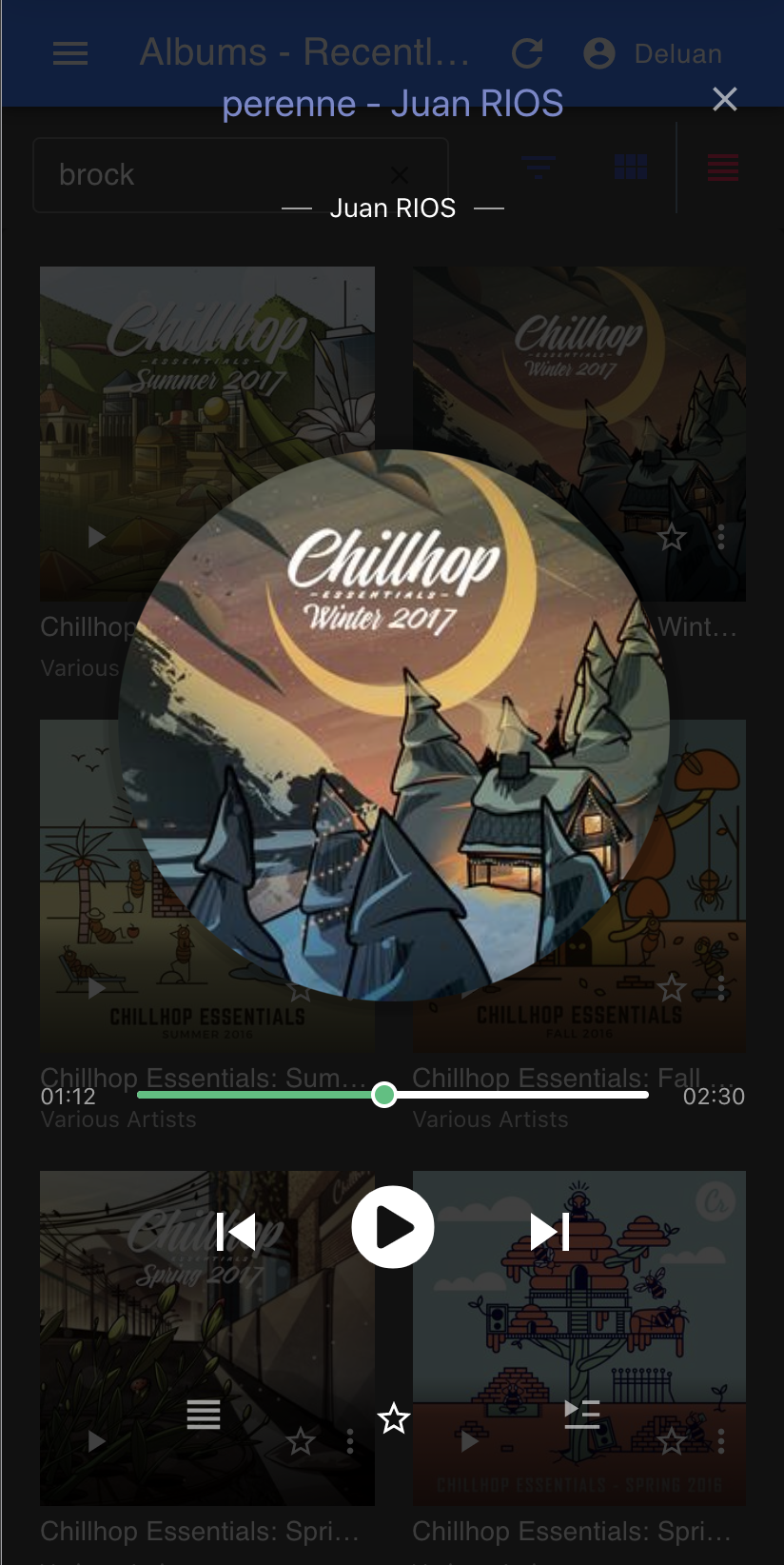
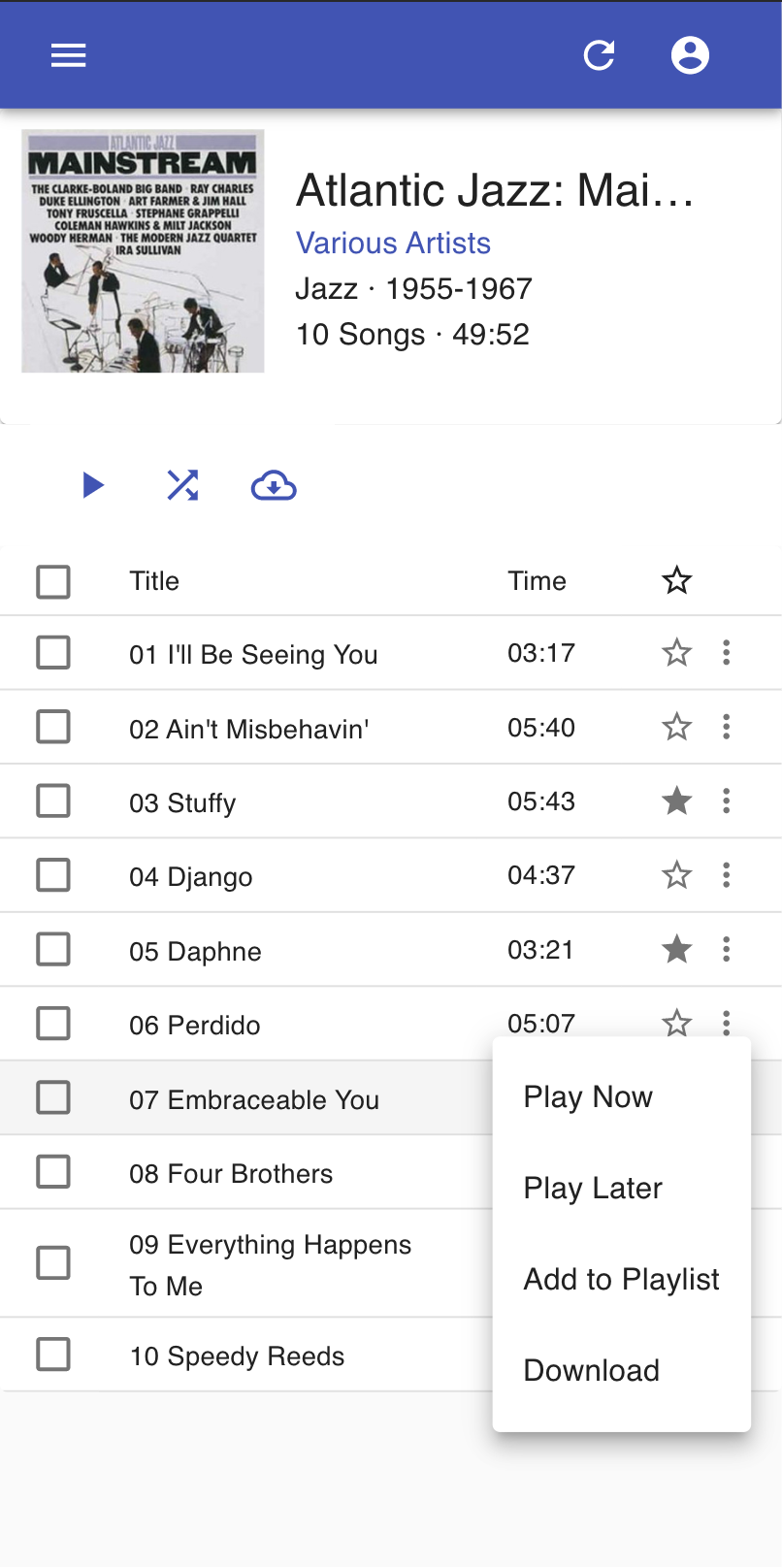
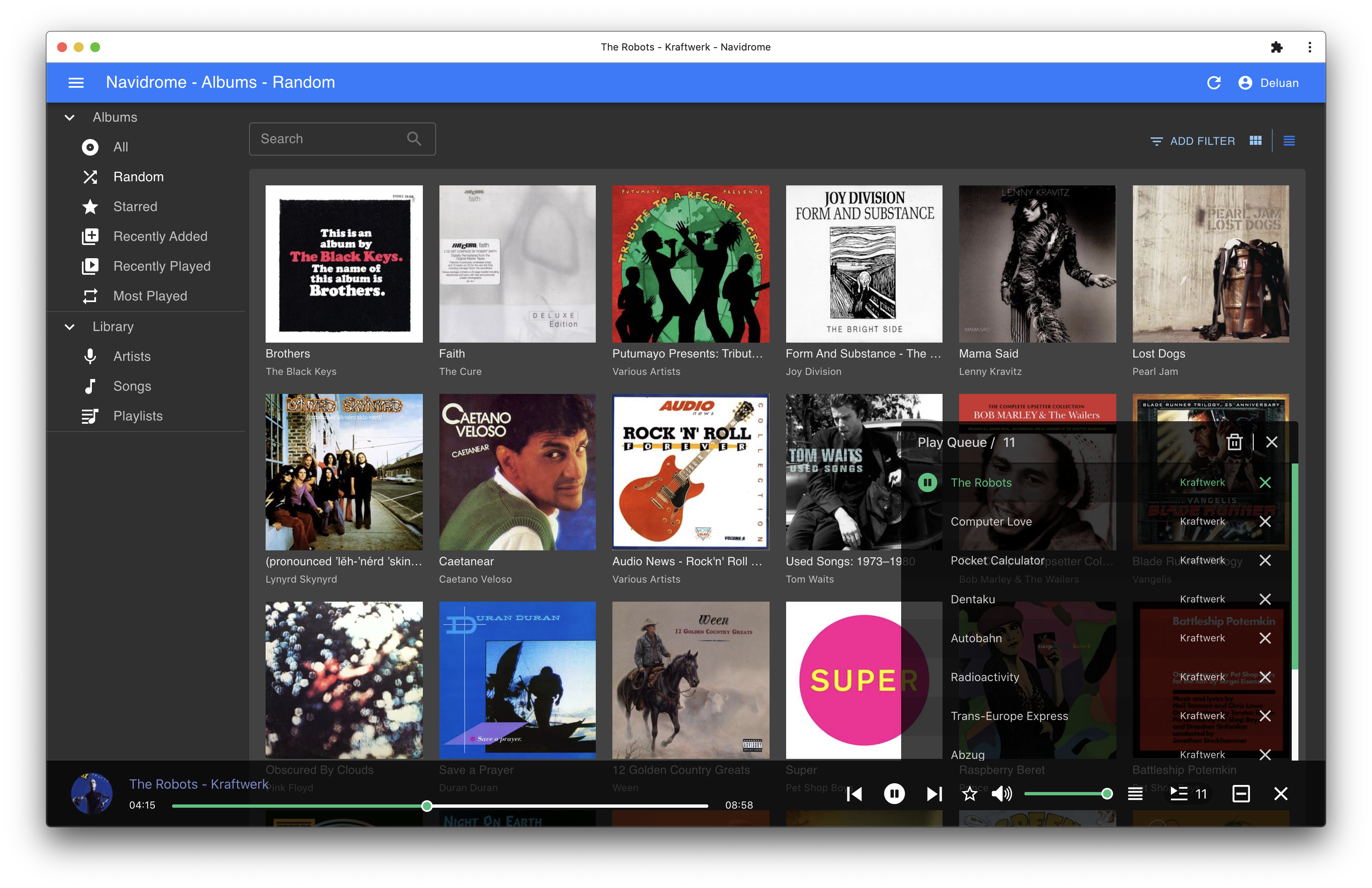
Screenshots