6c3e7e268b
* feat(agents): local agent genre-hint similar songs fallback

* feat(external): playlist instant mix via seed-track sampling

* test(external): cover playlist mix never-empty fallback and maxSeeds cap

Adds coverage for the empty-match seed fallback and the maxSeeds
call cap on GetSimilarSongsByTrack, per code review finding.

* feat(external): genre instant mix via seed-track sampling

* feat(external): album instant mix falls back to AudioMuse track similarity

* feat(external): artist instant mix falls back to seed-track sampling

* fix(jellyfin): route genre seeds through instant mix instead of empty

* feat(jellyfin): add /Albums/{id}/Similar route for albumMix radio

* perf(external): bound playlist seed sampling to a random N

samplePlaylistTracks loaded an entire playlist's joined rows just to keep
5 random seeds; push the bound and randomization into the query instead,
matching the other samplers (GetRandom/GetAllByTags with Max).

Fixing this surfaced a real bug: resetSeededRandom's SEEDEDRAND rewrite
assumed every table's id is TEXT, but playlist_tracks.id is an INTEGER
position, so the random sort silently dropped every row. Cast the id to
TEXT before hashing (no-op for the other, TEXT-id tables).

Also trims a changelog-flavored comment and a duplicated rationale in
server/jellyfin/similar_test.go.

* refactor(external): parallelize seed mix and dedup mix helpers

Run the up-to-5 per-seed GetSimilarSongsByTrack calls concurrently (errgroup),
route the four container cases through a shared seedMix helper, flatten the
genre lookup, and sample playlist seeds without forcing a smart-playlist
rebuild. Share the media-file->Song mapping in the local agent.

* perf(agents): use the indexed genre filter for local similarity

Replace GetAllByTags (a json_tree scan of every media_file row) with the
media_file_tags semi-join from #5940, deriving the seed's genre tag ids
locally since they hash from (name, value).

Also carry the library id and the recording MBID on the returned songs:
the matcher resolves by id first and looks up mbz_recording_id, so the
release-track id it got before matched nothing and the local fallback
silently returned no songs.

* refactor: drop redundant MBID and fold mixFromSeeds into seedMix

The local agent returns library tracks, so the id alone resolves them in the
matcher's first phase; the MBID was never consulted. mixFromSeeds had no
caller other than seedMix.

* docs: trim redundant comments

* fix(jellyfin): adopt the GUID id codec in the merged similar routes

getSimilarAlbums still used resolveItemID/DecodeID, which #5942 replaced with
itemIDParam; its tests passed raw ids that the strict codec now rejects.

* fix(external): guard non-positive counts and blend every seed

A negative Subsonic count reached matched[:count] and panicked. The matcher
also keeps input order and stops at count, so seed-grouped results let the
first seed fill the whole mix; interleaving gives every seed a share.

Drops the duplicate playlist-track mock in favour of tests.MockPlaylistTrackRepo,
which pages like the real repository and records the query options.

* fix(external): refresh smart playlists before sampling seeds

A smart playlist materializes no playlist_tracks until it is evaluated, so
sampling without the refresh mixed an empty seed set. The refresh is a no-op
for regular playlists, inside the refresh delay, and for non-owners.

* fix(external): skip missing tracks and a nil playlist-track repo when sampling

Tracks() logs and returns a nil repository when its own lookup fails, so the
chained GetAll panicked. Seeds can also reach the mix verbatim when the agents
find nothing, so a missing file would surface as an unplayable entry.

* fix(jellyfin): never report the seed album as its own similar album

The sampled-seed fallback returns the album's own tracks, which similarAlbums
mapped straight back to the requested album, often as the only result.

* test(agents): assert the genre predicate instead of relying on the mock

MockMediaFileRepo ignores QueryOptions.Filters, so the spec passed even with
no genre filter at all. It now checks the generated predicate carries the
seed's own tag id, the indexed join and the missing exclusion.

* fix(external): clamp the requested count before it becomes a query limit

Subsonic passes the client's count through unbounded. At MaxInt64 the local
agent's count+1 overflows negative, and GetRandom omits the SQL limit unless
Max is positive, so one request would hydrate every matching track. 500 is
what the widest caller (similarAlbums, limit*5) legitimately asks for.

* fix(external): deduplicate playlist seeds by media file

A playlist can hold the same file at several positions, so sampling its rows
could seed the mix twice: a wasted agent call, and a duplicate track whenever
the seed fallback kicks in.

* fix(external): drop tracks two seeds both recommend

The matcher re-emits a track when two inputs are identical, so overlapping
recommendations took several slots in the mix. Match the whole merged set and
dedup before trimming. Playlist sampling now over-fetches before its own
dedup, so repeated positions cannot collapse the seed count.

* test(external): make the seed-blend assertion independent of the shuffle

It matched four tracks and kept two at random, so both could come from the
first seed once in six runs. Keeping three of the four makes a seed-two track
unavoidable.

* fix(external): seed artist mixes from every credited role

media_file.artist_id is the deprecated primary artist, so an artist credited
only on the album, as on compilations, sampled no seeds at all. Use the same
participant filter the artist listings use.

* refactor(external): drop the now-vestigial seed interleaving

Matching the whole merged set removed the early truncation the interleave
guarded against, and the shuffle before the trim makes input order irrelevant.
Its comment described the old behaviour.

* test(agents): give the id-mapping fixture a matching genre

The related track carried no genre, so the real query would never return it;
the spec only passed because the mock ignores QueryOptions.Filters.

* test(agents): drop the MBID from the id-mapping fixture

Local agent candidates are non-missing library rows, so the matcher always
resolves them in its id phase and never reads the MBID. The field guarded a
regression that could not change behaviour.

* test(agents): remove unnecessary comment about MBID in GetArtistTopSongs test

* fix(jellyfin): only let a not-found entity fall through in getInstantMix

Discarding the error conflated a genre id, which never resolves, with a real
lookup failure, which then made a provider call that fails the same way.

* test: pin the invariants the specs only appeared to cover

The missing filter was asserted by substring, so flipping it to true passed
everywhere, including the spec named for it. Matching the whole merged set,
the local agent's over-fetch, and its no-genres early return had no coverage
at all; each is now pinned by a spec that fails when the code is broken.

* test: make the remaining specs say what they actually guard

The playlist-track spec named a sort whitelist it does not exercise; it guards
the integer-id CAST, so it now asserts no rows are dropped. The maxSeeds cap
passed with either bound removed, and the over-fetch was pinned by its literal
value rather than the duplicate positions it exists for. Also drops setup the
count guard returns before reaching.

* fix(external): fall back when the agent's picks are not in this library

A non-empty answer whose songs are all absent locally matched nothing and was
returned as-is, so the mix came back empty with sampleable source tracks
sitting right there.

* refactor(external): name the agent-then-fallback flow once

Each entity case repeated the same error and emptiness plumbing around the
matcher. mixFromAgent states it once and each case supplies only what differs:
how to ask, and what to do when the answer is unusable.

Navidrome Music Server 








Navidrome is an open source web-based music collection server and streamer. It gives you freedom to listen to your music collection from any browser or mobile device. It's like your personal Spotify!
Note: The master branch may be in an unstable or even broken state during development.
Please use releases instead of
the master branch in order to get a stable set of binaries.
Check out our Live Demo!
Any feedback is welcome! If you need/want a new feature, find a bug or think of any way to improve Navidrome, please file a GitHub issue or join the discussion in our Subreddit. If you want to contribute to the project in any other way (ui/backend dev, translations, themes), please join the chat in our Discord server.
Installation
See instructions on the project's website
Cloud Hosting
PikaPods has partnered with us to offer you an officially supported, cloud-hosted solution. A share of the revenue helps fund the development of Navidrome at no additional cost for you.

Features
- Handles very large music collections
- Streams virtually any audio format available
- Reads and uses all your beautifully curated metadata
- Great support for compilations (Various Artists albums) and box sets (multi-disc albums)
- Multi-user, each user has their own play counts, playlists, favourites, etc...
- Very low resource usage
- Multi-platform, runs on macOS, Linux and Windows. Docker images are also provided
- Ready to use binaries for all major platforms, including Raspberry Pi
- Automatically monitors your library for changes, importing new files and reloading new metadata
- Supports lyrics from sidecar .ttml, .yaml/.yml Lyricsfile, .elrc, .lrc, .srt, .txt files and embedded TTML, Enhanced LRC, LRC, SRT, and plain-text tags (via
lyricspriority) - Themeable, modern and responsive Web interface based on Material UI
- Compatible with all Subsonic/Madsonic/Airsonic clients
- Transcoding on the fly. Can be set per user/player. Opus encoding is supported
- Translated to various languages
Translations
Navidrome uses POEditor for translations, and we are always looking for more contributors
Documentation
All documentation can be found in the project's website: https://www.navidrome.org/docs. Here are some useful direct links:
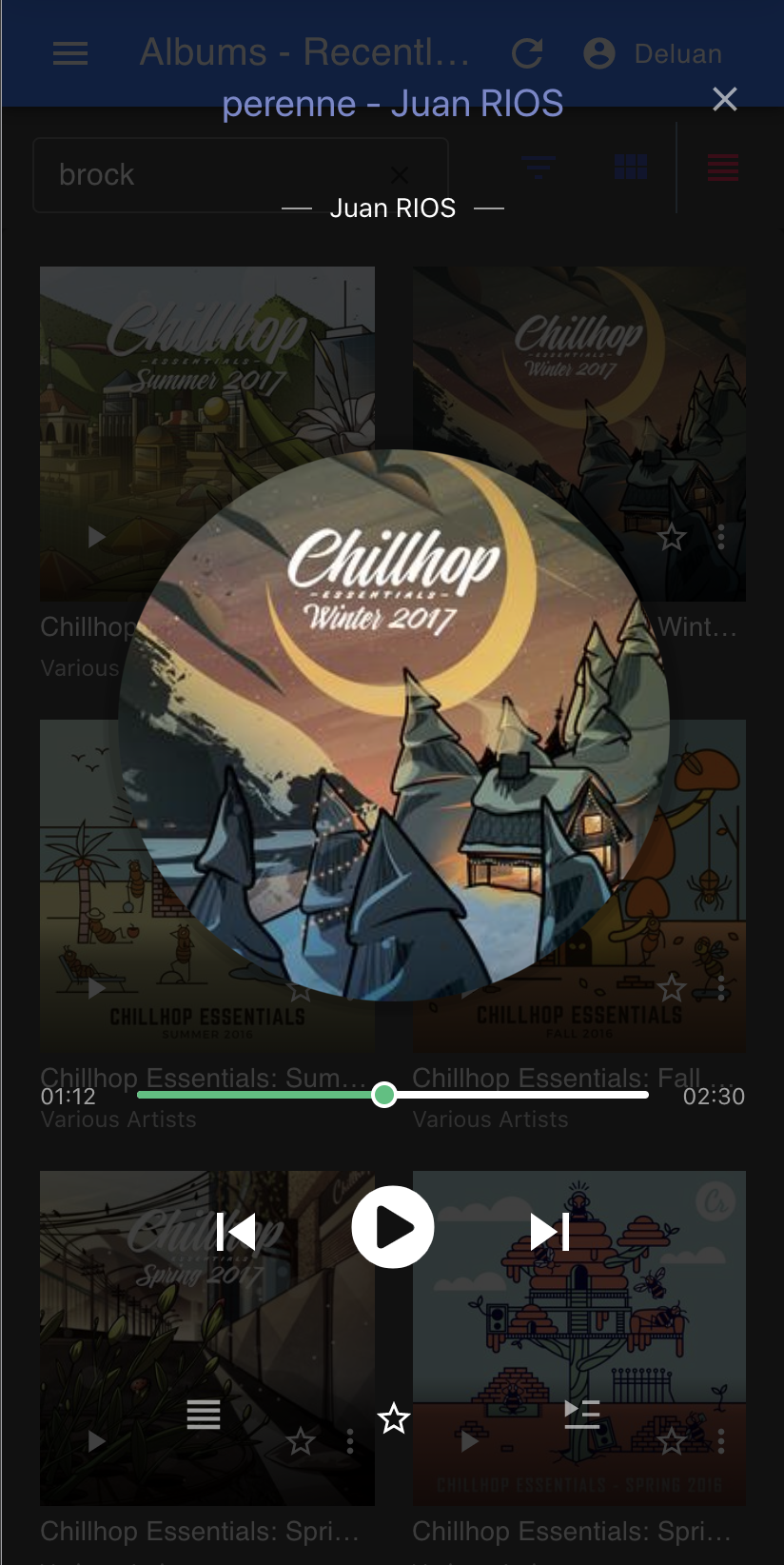
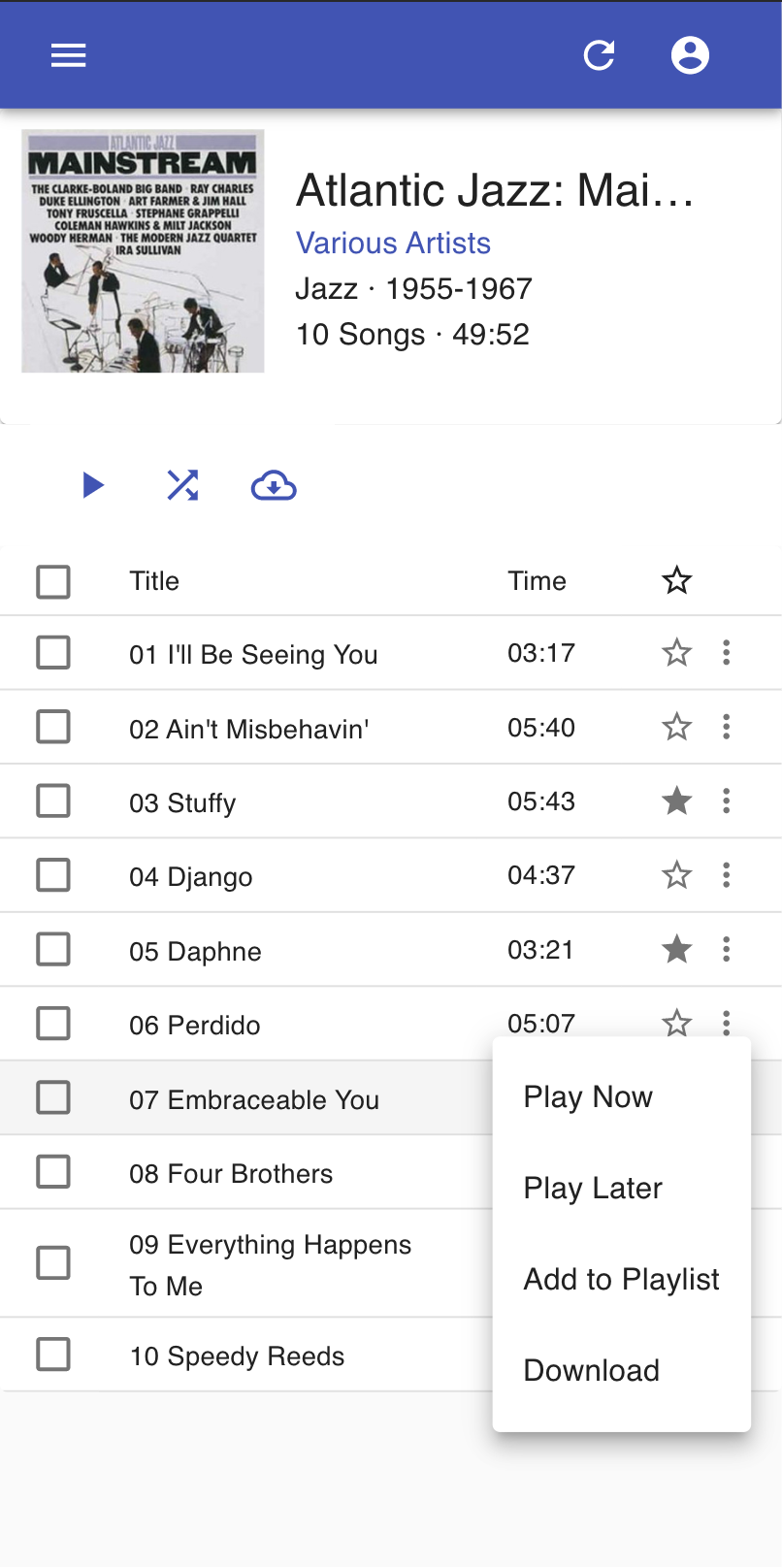
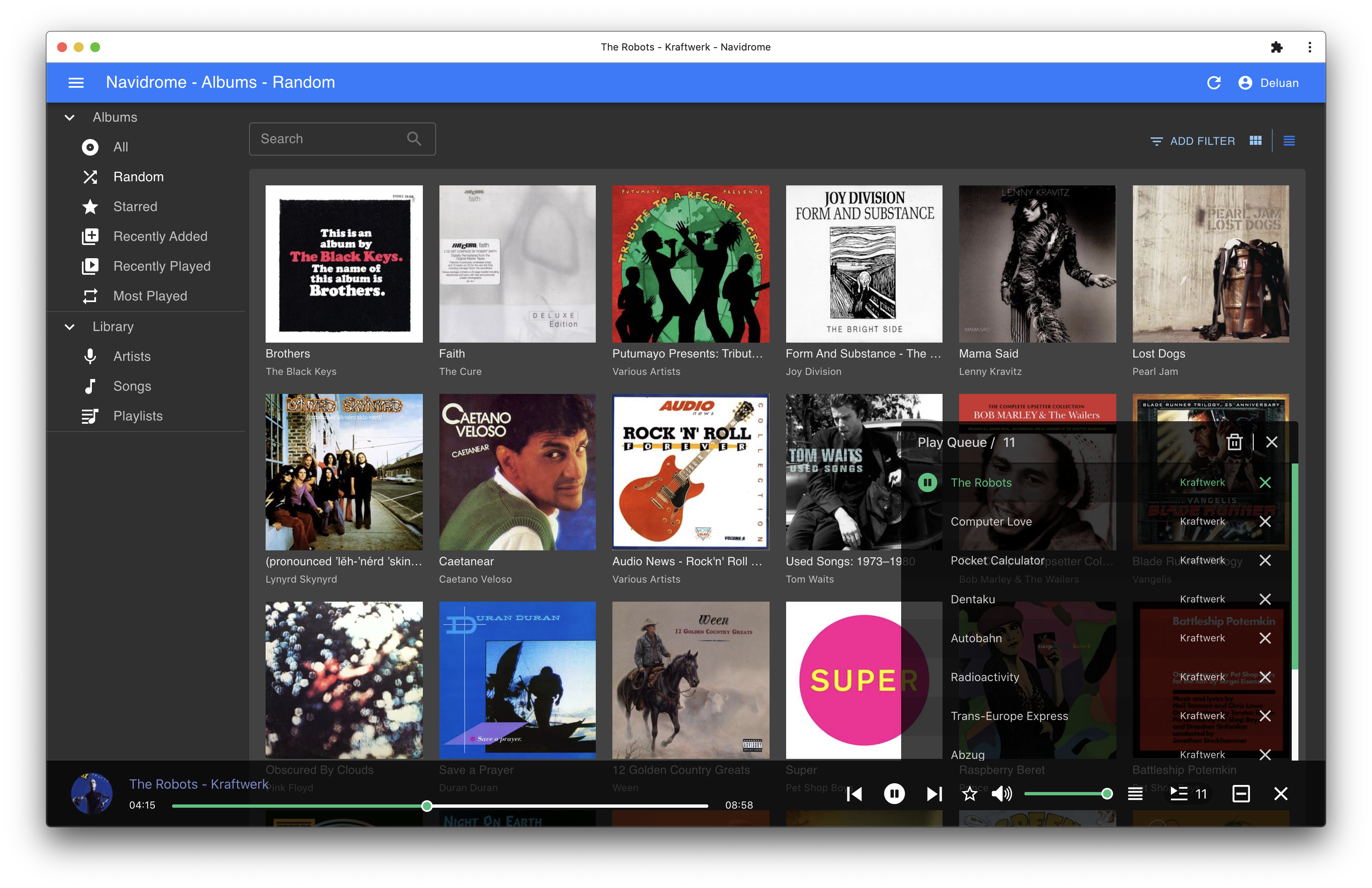
Screenshots