757ca783d3
* fix(instant-mix): top short mixes up instead of returning what the first source found

SimilarSongs returned the first non-empty source's tracks, however few. For a
thinly-represented artist that meant a 3-track mix no matter the requested count:
the artist agent found nothing, the similar-artists fallback matched 3 library
tracks, and `len(res) > 0` kept seed-track sampling from ever running.

Clients treat that as a failed mix and retry with a bigger limit forever. Finamp
cycles limit 34 through 472 and starts over, ~1 request every 2s indefinitely,
each one re-hitting Last.fm, Deezer and AudioMuse.

Sources are now chained rather than raced: each one tops the mix up until it
holds count tracks, so the agent's picks, the similar-artists fallback and
seed-track sampling all contribute instead of the first one winning outright.

* refactor(external): move similar-songs code to its own file

provider.go held two distinct concerns: artist/album external metadata and the
similar-songs mix pipeline. The mix code was already one contiguous block, and
maxSeeds, maxSimilarSongs and dedupByID were used by nothing else.

Moved SimilarSongs and its helpers to provider_similarsongs.go, matching the
existing provider_similarsongs_test.go. Pure code motion: the moved block is
byte-for-byte unchanged and provider.go has no additions, only deletions.

* fix(instant-mix): dedup before deciding a mix is full

topUp measured res before deduplicating it. Matcher.MatchSongs deliberately
re-emits a library track when the same input song repeats, and the similar-artists
fallback can reach one track through several artists, so len(res) could equal count
while holding fewer unique tracks. That returned a mix with duplicates in it and
stopped the top-up early; the caller then deduplicated and handed back a short mix,
which is the client retry loop this branch set out to fix.

Deduplicate first, so the length check counts what the client will actually receive.

* perf(instant-mix): skip a fallback once the mix is already full

The artist path nested one topUp inside another, so the inner one measured only
similarSongsFallback's own result against the full count. With 49 agent matches and
one fallback match for count=50 the mix was already full, yet seed-track sampling
still ran and fired up to five GetSimilarSongsByTrack calls whose results the outer
topUp then truncated away.

topUp now takes the sources as a variadic list and re-checks the accumulated mix
before each one, so a later, costlier source only runs while the mix is still short.
That also flattens the artist case: the agent, the similar-artists fallback and
seed-track sampling are now three peers in one chain instead of two nested calls.

* fix(instant-mix): count distinct tracks when picking the fallback mix

similarSongsFallback stopped after count picks from the weighted chooser, but a
track can sit in that chooser once per artist listing it in their top songs, and
Pick removes the entry it returns. Repeats therefore consumed pick slots and left
unique candidates stranded, so the batch could come back short of count. On the
track path this is the only source, so that short mix reached the client and kept
the retry loop alive.

Track the ids already picked and keep drawing until count distinct tracks are held
or the chooser is empty.

* fix(instant-mix): match the whole agent response before trimming

MatchSongs was capped at count, and it re-emits a track when the same song repeats,
so [A, A, B] with count=2 returned [A, A] and never reached B. topUp then shrank
that to [A] and, with an empty or overlapping fallback, the mix stayed short even
though B had been available all along. seedMix already matched its full merged set
for this reason; mixFromAgent now does the same and leaves the trim to topUp.

Also drop the capacity hint on the picked-ids map. It was sized from the caller's
count, which CodeQL flags as an allocation sized by user input (go/uncontrolled-
allocation-size). SimilarSongs clamps count to maxSimilarSongs long before this
point, so the hint bought nothing worth the alert.

* refactor(instant-mix): tidy the mix chain and its specs

Quality pass over the new code, no behaviour change:

- topUp: drop the first-vs-last error bookkeeping (the value is only read when the
  mix is empty, so the distinction is unobservable) and the redundant nil guard
  (dedupByID returns nil for an empty result, so both branches already agreed).
- mixFromAgent: assign through the if-scoped err instead of a second error name.
- Hoist the similar-artists fallback closure written verbatim in two switch arms.
- Use map[string]struct{} in the pick loop, matching dedupByID in the same file.
- Trim three comments back within budget; two restated the line below them and one
  carried commit-message rationale.
- Tests: add an ids() helper for the ID assertion repeated seven times, and fold
  the track-entity stub block copied into three specs into stubTrackEntity. The
  block hard-coded .Twice() on GetEntityByID, which pinned an implementation
  detail no spec asserts.

* revert(instant-mix): inline the similar-artists fallback closure again

Hoisting it to a shared artistFallback var moved the call away from the arm that
uses it and saved nothing: each arm reads better spelling out its own sources.

Navidrome Music Server 








Navidrome is an open source web-based music collection server and streamer. It gives you freedom to listen to your music collection from any browser or mobile device. It's like your personal Spotify!
Note: The master branch may be in an unstable or even broken state during development.
Please use releases instead of
the master branch in order to get a stable set of binaries.
Check out our Live Demo!
Any feedback is welcome! If you need/want a new feature, find a bug or think of any way to improve Navidrome, please file a GitHub issue or join the discussion in our Subreddit. If you want to contribute to the project in any other way (ui/backend dev, translations, themes), please join the chat in our Discord server.
Installation
See instructions on the project's website
Cloud Hosting
PikaPods has partnered with us to offer you an officially supported, cloud-hosted solution. A share of the revenue helps fund the development of Navidrome at no additional cost for you.

Features
- Handles very large music collections
- Streams virtually any audio format available
- Reads and uses all your beautifully curated metadata
- Great support for compilations (Various Artists albums) and box sets (multi-disc albums)
- Multi-user, each user has their own play counts, playlists, favourites, etc...
- Very low resource usage
- Multi-platform, runs on macOS, Linux and Windows. Docker images are also provided
- Ready to use binaries for all major platforms, including Raspberry Pi
- Automatically monitors your library for changes, importing new files and reloading new metadata
- Supports lyrics from sidecar .ttml, .yaml/.yml Lyricsfile, .elrc, .lrc, .srt, .txt files and embedded TTML, Enhanced LRC, LRC, SRT, and plain-text tags (via
lyricspriority) - Themeable, modern and responsive Web interface based on Material UI
- Compatible with all Subsonic/Madsonic/Airsonic clients
- Transcoding on the fly. Can be set per user/player. Opus encoding is supported
- Translated to various languages
Translations
Navidrome uses POEditor for translations, and we are always looking for more contributors
Documentation
All documentation can be found in the project's website: https://www.navidrome.org/docs. Here are some useful direct links:
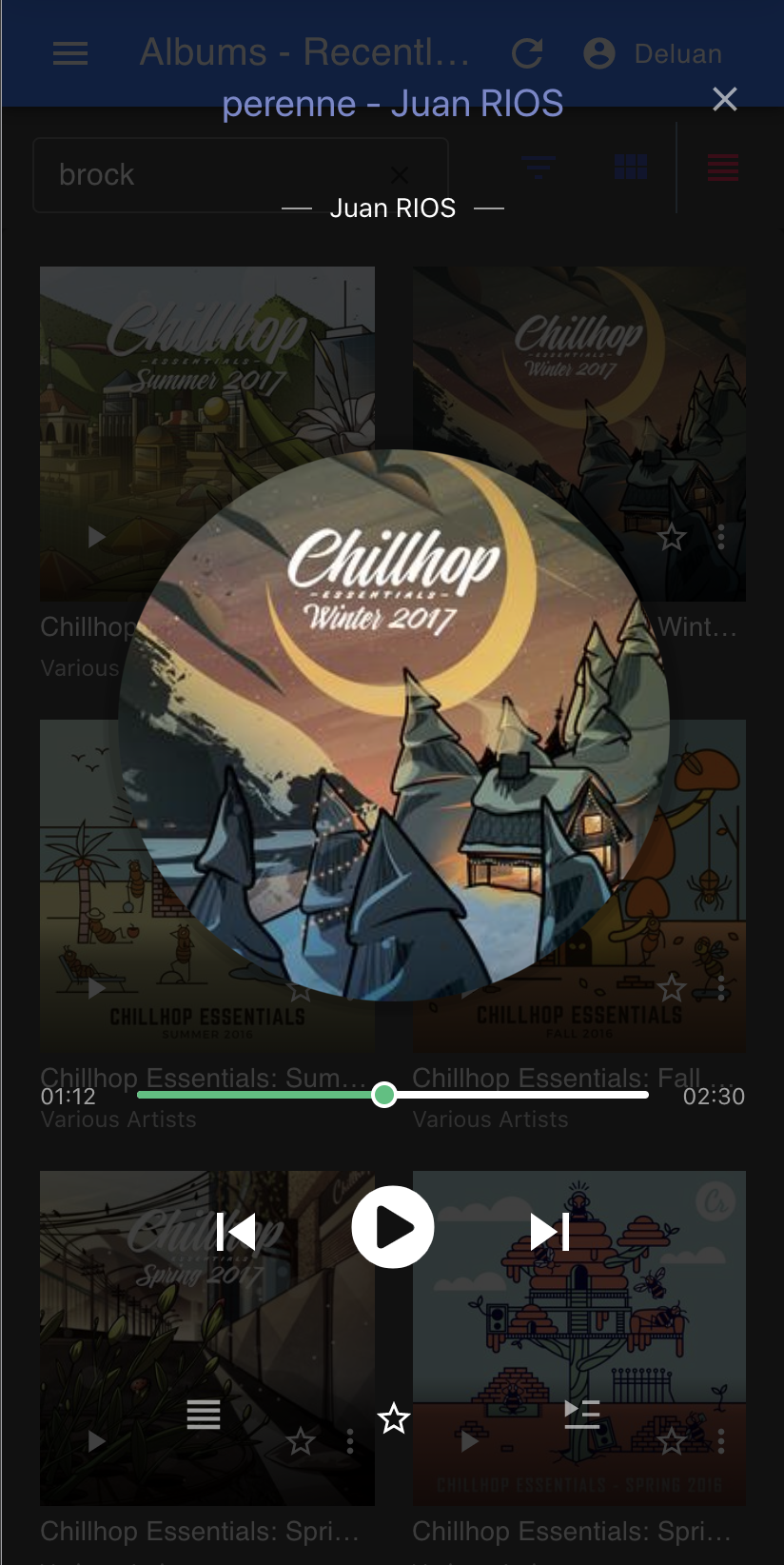
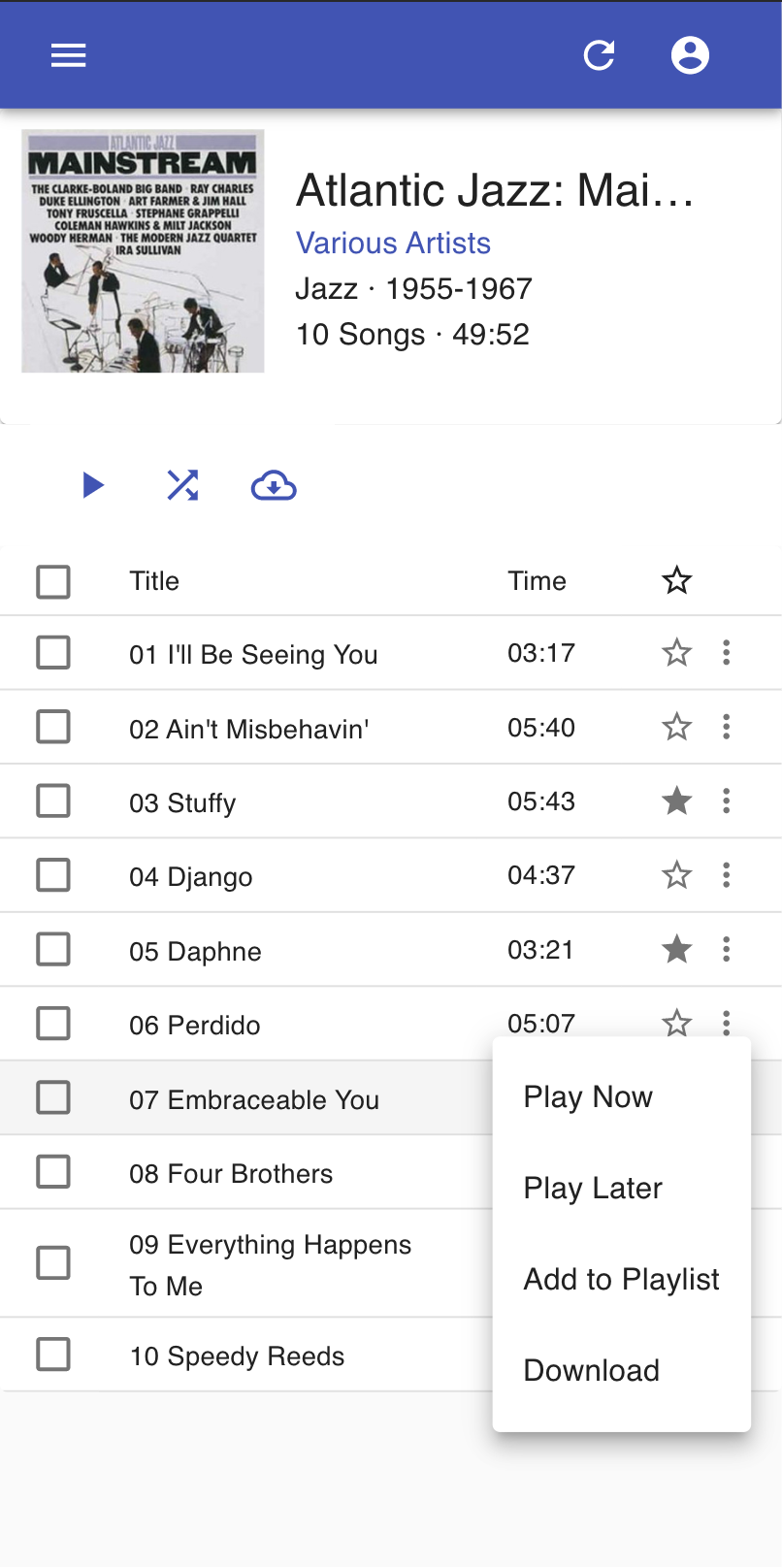
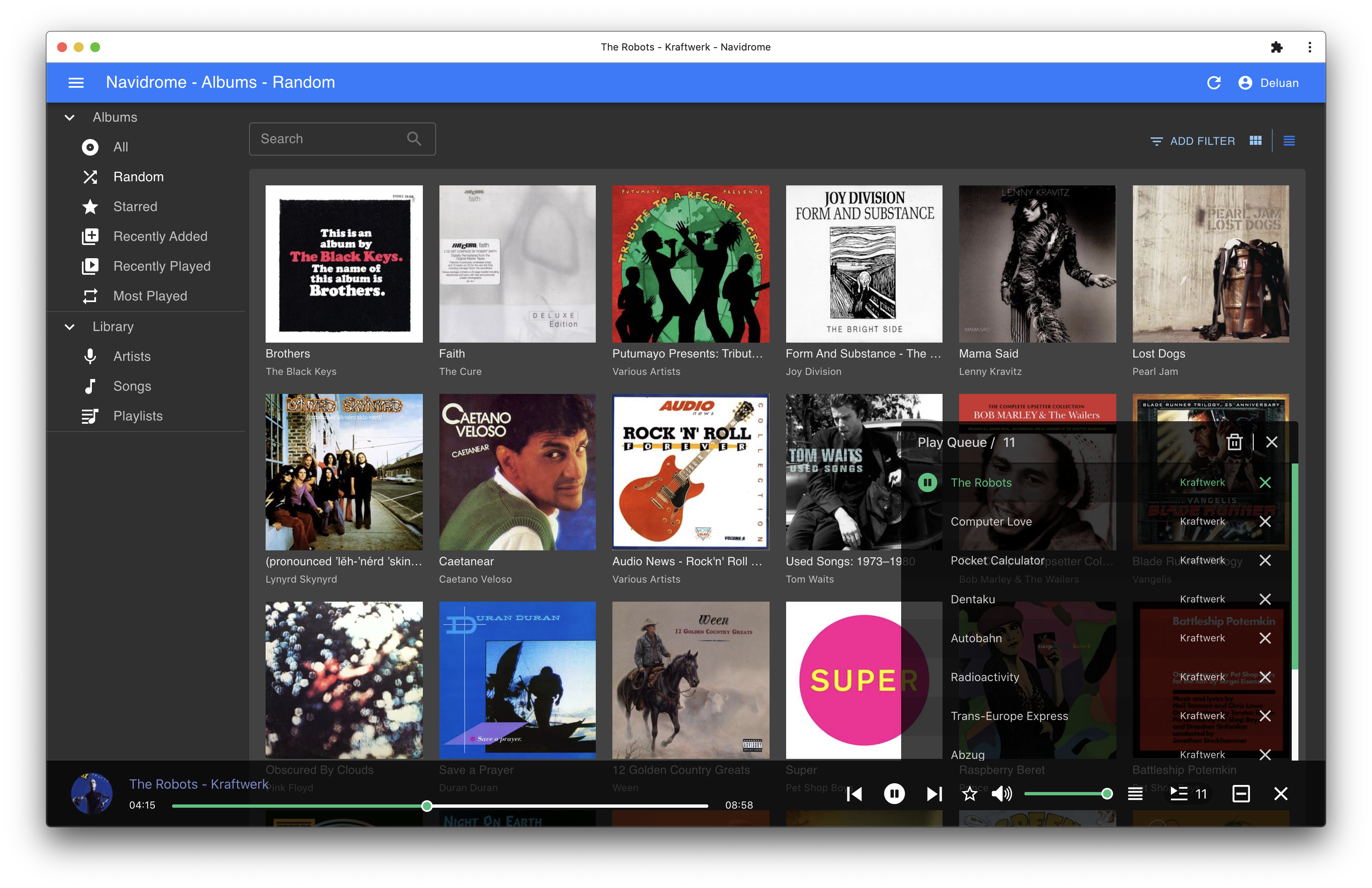
Screenshots