7993fb9158
* perf(persistence): use *_artists join tables for artist participant filters

The artist_id/artists_id, role_<role>_id and role_total_id filters, plus the
AlbumsByArtistID/AlbumsByContributingArtistID/SongsByArtistID helpers, scanned
every album or media_file row through json_tree(participants, ...), which no
index can serve — the cause of multi-second artist pages on large libraries
(discussion #5929). Rewrite them to semi-join the album_artists and
media_file_artists tables via a shared ParticipantIDFilter helper. The join
tables are written in the same transaction as the participants JSON, so
results are unchanged.

album_artists' unique constraint led with album_id, so artist-driven lookups
had no usable index. Rebuild the table with the constraint reordered to
(artist_id, album_id, role, sub_role), mirroring media_file_artists, instead
of adding a fourth index: measured within 4% of a dedicated covering index
(geomean -92.5% vs json_tree on a 96k-track production copy) while saving
~7MiB and per-scan write amplification. Album-side consumers (participant
rewrites, FK cascades, markMissing) keep using album_artists_album_id, and
updateParticipants' ON CONFLICT target already names artist_id first. The
rebuild is linear work: 1.1s on a 113k-row production copy.

* chore(gitignore): add temp benchmark files to ignore list

* fix(persistence): clear album_artists when an album is saved without participants

albumRepository.Put skipped updateParticipants when the Participants map was empty, so a hypothetical save with no participants would write {} to the JSON column but leave stale album_artists rows behind, now visible through the semi-join filters. No current caller can hit this (albums built by MediaFiles.ToAlbum always have participants), but make Put unconditional anyway, matching mediaFileRepository.Put, so the join table always moves with the JSON. Raised by Codex review on #5930.

Navidrome Music Server 








Navidrome is an open source web-based music collection server and streamer. It gives you freedom to listen to your music collection from any browser or mobile device. It's like your personal Spotify!
Note: The master branch may be in an unstable or even broken state during development.
Please use releases instead of
the master branch in order to get a stable set of binaries.
Check out our Live Demo!
Any feedback is welcome! If you need/want a new feature, find a bug or think of any way to improve Navidrome, please file a GitHub issue or join the discussion in our Subreddit. If you want to contribute to the project in any other way (ui/backend dev, translations, themes), please join the chat in our Discord server.
Installation
See instructions on the project's website
Cloud Hosting
PikaPods has partnered with us to offer you an officially supported, cloud-hosted solution. A share of the revenue helps fund the development of Navidrome at no additional cost for you.

Features
- Handles very large music collections
- Streams virtually any audio format available
- Reads and uses all your beautifully curated metadata
- Great support for compilations (Various Artists albums) and box sets (multi-disc albums)
- Multi-user, each user has their own play counts, playlists, favourites, etc...
- Very low resource usage
- Multi-platform, runs on macOS, Linux and Windows. Docker images are also provided
- Ready to use binaries for all major platforms, including Raspberry Pi
- Automatically monitors your library for changes, importing new files and reloading new metadata
- Supports lyrics from sidecar .ttml, .yaml/.yml Lyricsfile, .elrc, .lrc, .srt, .txt files and embedded TTML, Enhanced LRC, LRC, SRT, and plain-text tags (via
lyricspriority) - Themeable, modern and responsive Web interface based on Material UI
- Compatible with all Subsonic/Madsonic/Airsonic clients
- Transcoding on the fly. Can be set per user/player. Opus encoding is supported
- Translated to various languages
Translations
Navidrome uses POEditor for translations, and we are always looking for more contributors
Documentation
All documentation can be found in the project's website: https://www.navidrome.org/docs. Here are some useful direct links:
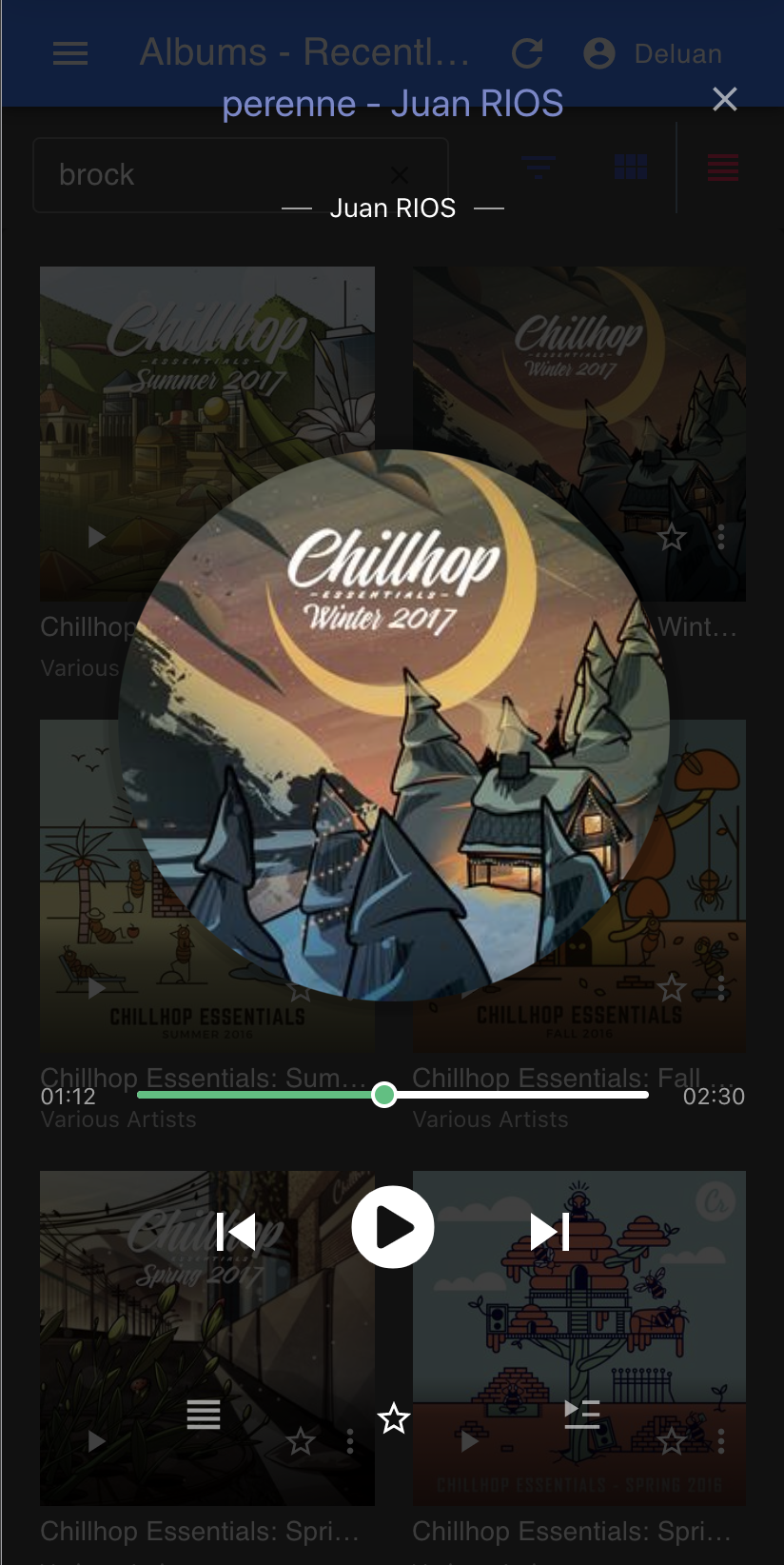
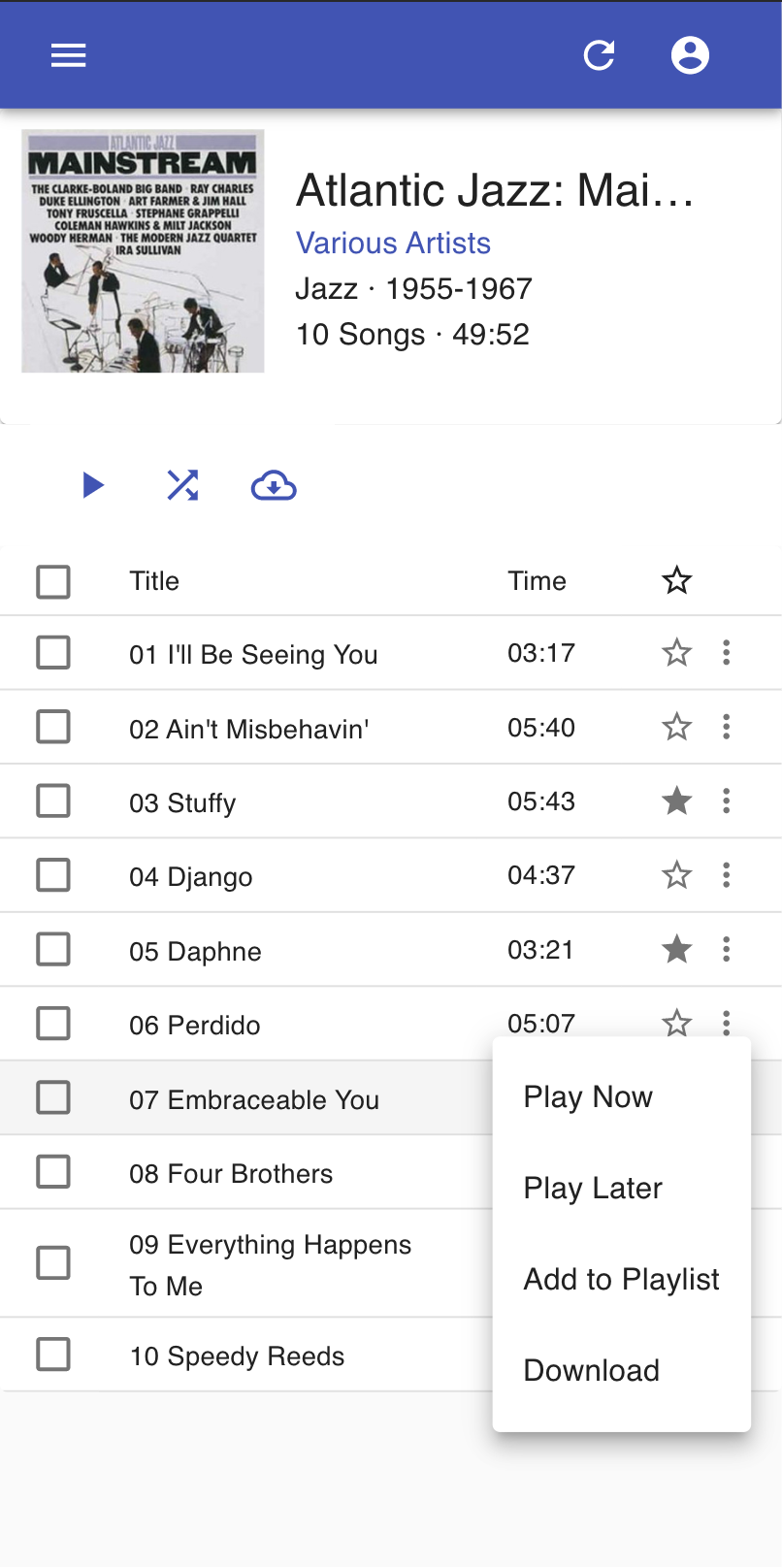
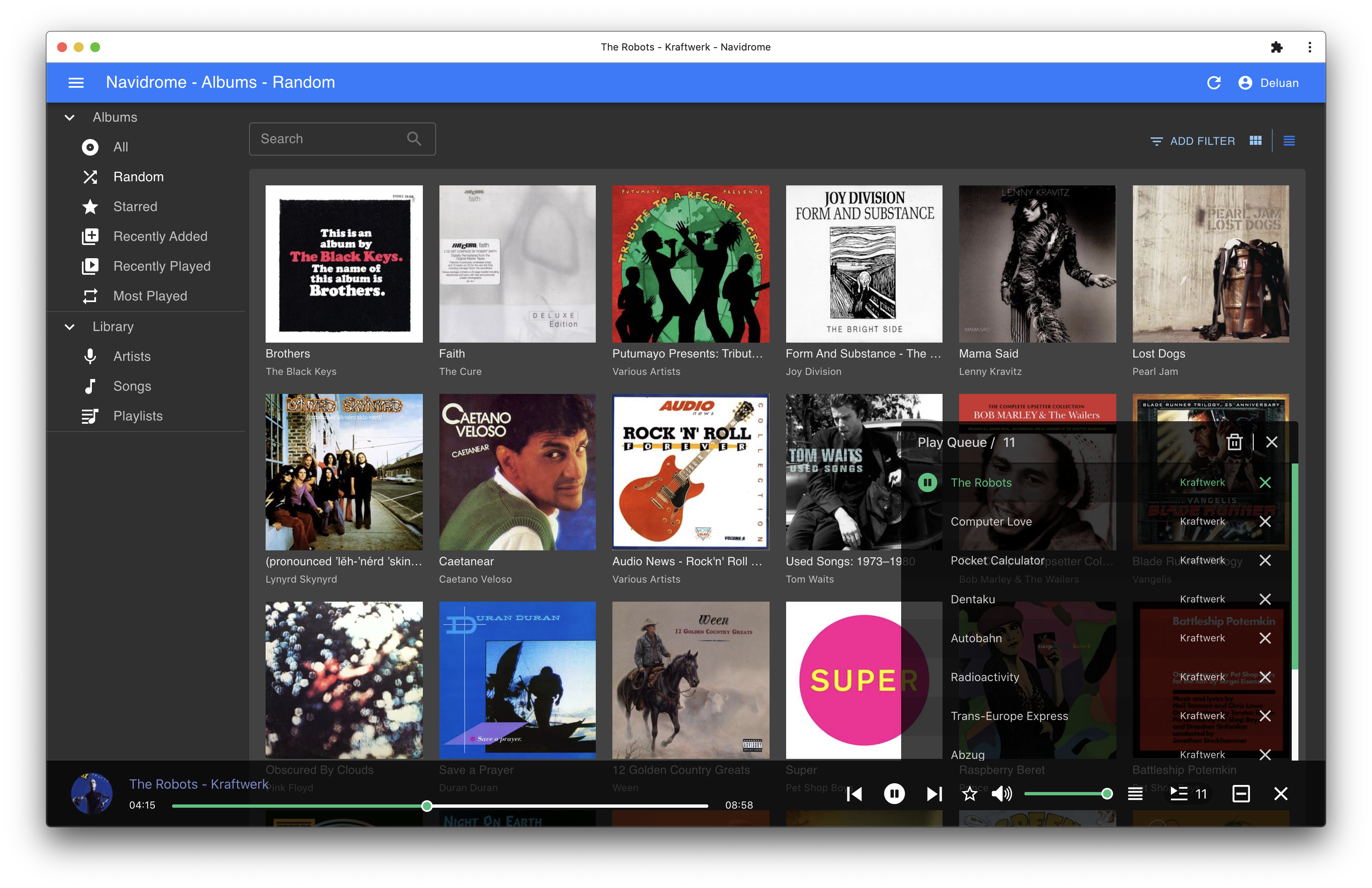
Screenshots