8e784b6af7
On a multi-library instance, a few reads and writes built their own queries
without the per-user library filter that every other media read applies. A
user granted only some libraries could see, and store, tracks from libraries
they had no access to.

- getBookmarks now filters the query. It has to be the query and not the
  result: the loop below it pre-sizes the response from the bookmark count,
  so a row dropped afterwards would emit an empty bookmark entry.
- createBookmark rejects an id the caller cannot read, returning error 70 to
  match getSong. Stored rows are left alone rather than purged, so a
  temporary revoke does not lose saved playback positions.
- playlistTrackRepository Read, Count and GetAlbumIDs get the filter their
  siblings CountAll and GetMediaFileIDs already had. Read is the one that
  mattered most: its id is the integer playlist position, so it needed no
  track id at all.
- Playlist track writes are filtered in playlistRepository.addTracks, the
  only writer of playlist_tracks rows apart from smart playlists, so Add,
  Insert, AddAlbums/AddArtists/AddDiscs and a full replace through Put all
  go through it. Insert reserves a slot per requested id, so when the filter
  drops one it renumbers to close the hole.
- playTracker.GetNowPlaying honours its context instead of discarding it.
  The cache is process-global, so the filter belongs in the tracker rather
  than in the Subsonic handler, and any future caller inherits it.

Admins and single-library installs are unaffected: applyLibraryFilter and
HasLibraryAccess both short-circuit for them. Scanner playlist sync runs as
admin, and M3U and CLI imports already resolve tracks through FindByPaths as
the same user, so neither changes.

Navidrome Music Server 






Navidrome is an open source web-based music collection server and streamer. It gives you freedom to listen to your music collection from any browser or mobile device. It's like your personal Spotify!
Note: The master branch may be in an unstable or even broken state during development.
Please use releases instead of
the master branch in order to get a stable set of binaries.
Check out our Live Demo!
Any feedback is welcome! If you need/want a new feature, find a bug or think of any way to improve Navidrome, please file a GitHub issue or join the discussion in our Subreddit. If you want to contribute to the project in any other way (ui/backend dev, translations, themes), please join the chat in our Discord server.
Installation
See instructions on the project's website
Cloud Hosting
PikaPods has partnered with us to offer you an officially supported, cloud-hosted solution. A share of the revenue helps fund the development of Navidrome at no additional cost for you.

Features
- Handles very large music collections
- Streams virtually any audio format available
- Reads and uses all your beautifully curated metadata
- Great support for compilations (Various Artists albums) and box sets (multi-disc albums)
- Multi-user, each user has their own play counts, playlists, favourites, etc...
- Very low resource usage
- Multi-platform, runs on macOS, Linux and Windows. Docker images are also provided
- Ready to use binaries for all major platforms, including Raspberry Pi
- Automatically monitors your library for changes, importing new files and reloading new metadata
- Supports lyrics from sidecar .ttml, .yaml/.yml Lyricsfile, .elrc, .lrc, .srt, .txt files and embedded TTML, Enhanced LRC, LRC, SRT, and plain-text tags (via
lyricspriority) - Themeable, modern and responsive Web interface based on Material UI
- Compatible with all Subsonic/Madsonic/Airsonic clients
- Transcoding on the fly. Can be set per user/player. Opus encoding is supported
- Translated to various languages
Translations
Navidrome uses POEditor for translations, and we are always looking for more contributors
Documentation
All documentation can be found in the project's website: https://www.navidrome.org/docs. Here are some useful direct links:
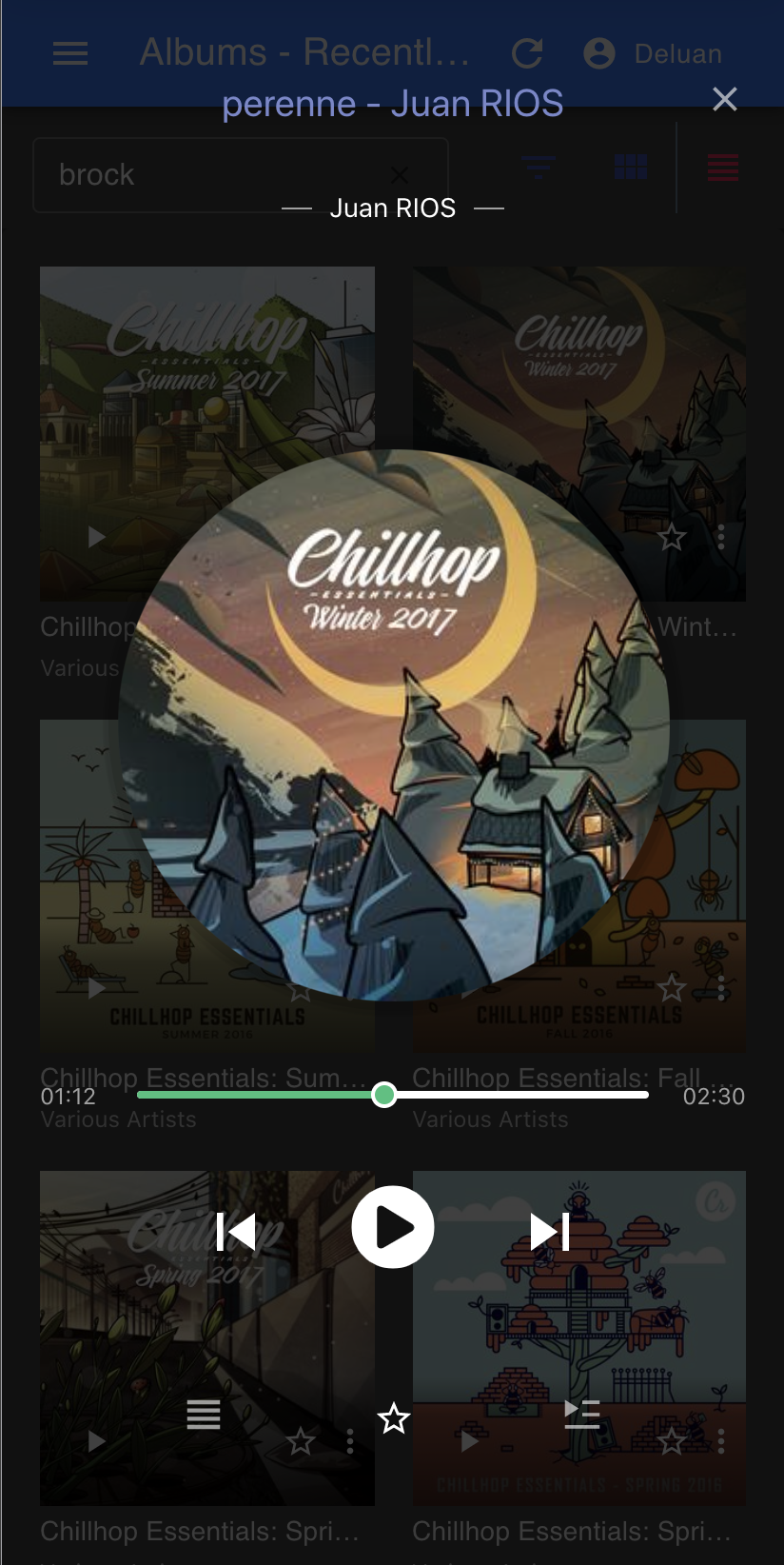
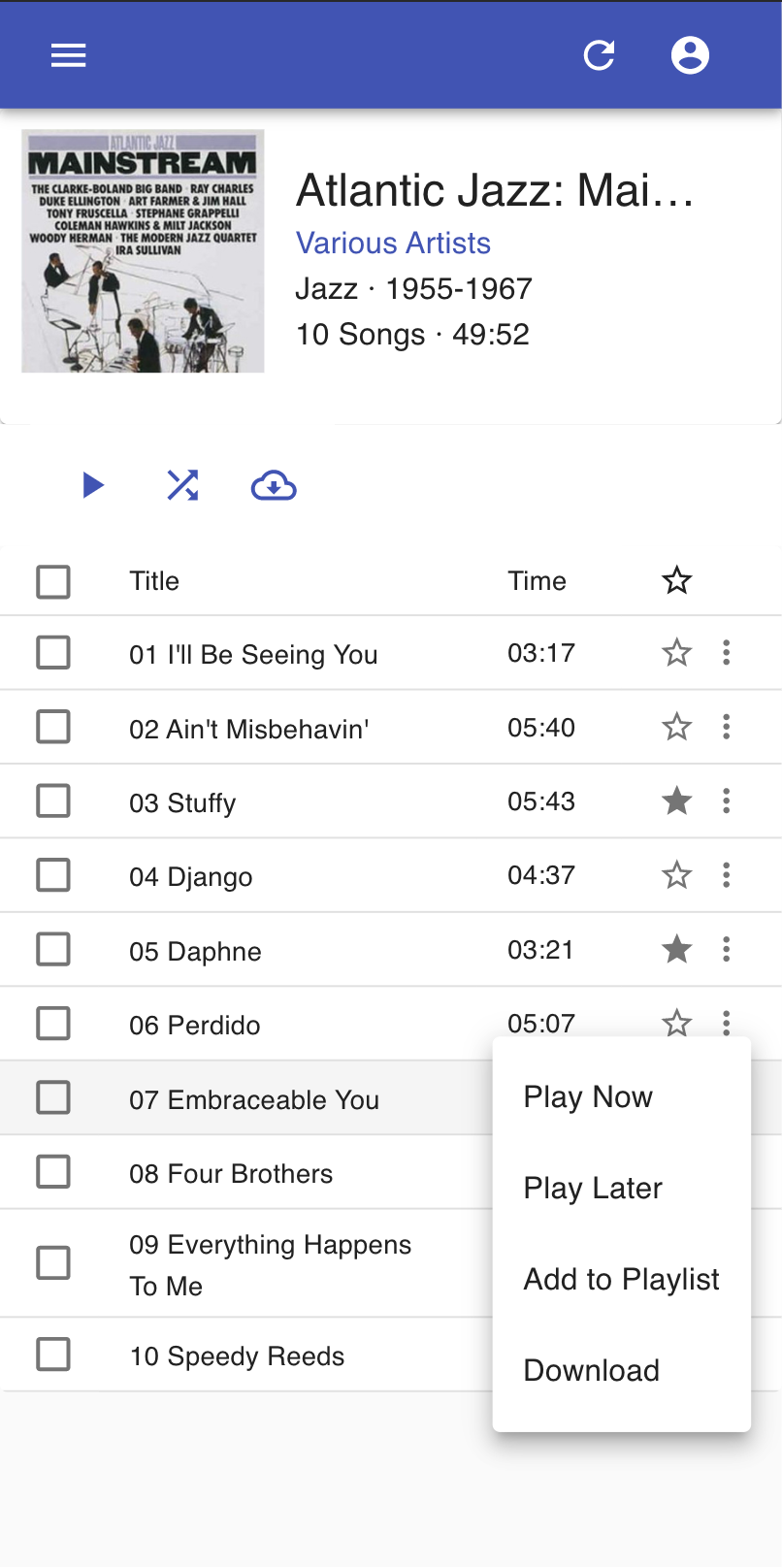
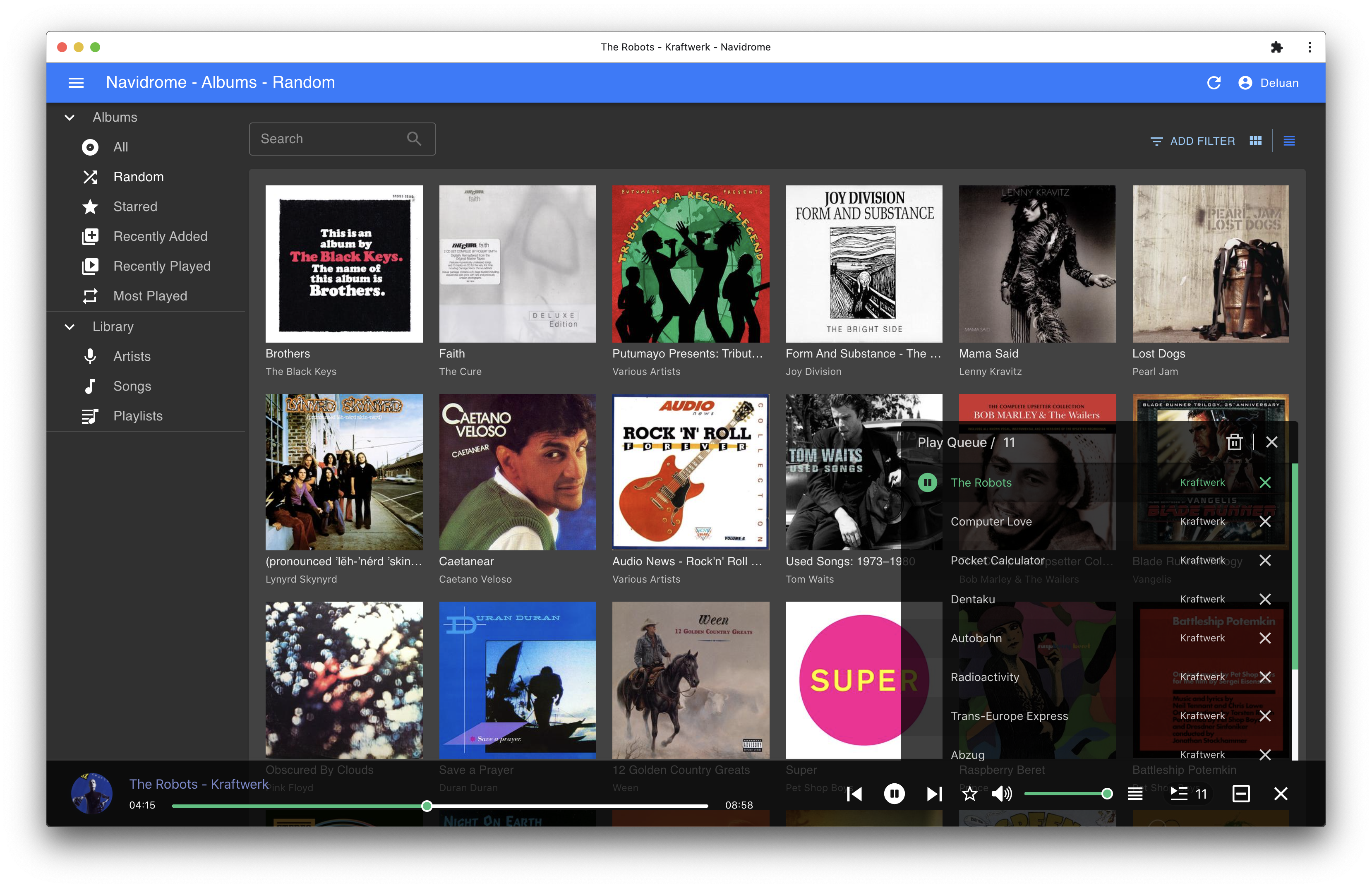
Screenshots